It is one of the most common health questions online, and the answers can be very different. One person says eight glasses. Another says drink until your urine is clear. A third says just follow your thirst. So how much water should you drink a day, and does the number really matter?
The short version is that there is no single number for everyone. Official guidelines give useful ranges, and your own body, your climate and your activity level fine tune them. This guide explains the numbers from major health bodies, how to know if you are drinking enough and simple ways to make hydration easier.
Quick answer: Most healthy adults need roughly 2 to 3.7 litres (about 8 to 15 cups) of total fluid per day, including water from food and other drinks. Women often need about 2 to 2.7 litres and men about 2.5 to 3.7 litres, depending on the guideline used. You may need more in hot weather, during exercise, pregnancy or illness.
Why Your Body Needs Water
Water makes up a large part of your body weight. It helps carry nutrients, regulate temperature, cushion joints, support digestion and remove waste through urine and sweat. Even mild dehydration, which means losing a small amount of body water, can affect how you feel. People often report headaches, tiredness, poor concentration and a dry mouth.
Your body loses water all day through breathing, sweating, using the bathroom and even normal skin evaporation. You replace it by drinking and by eating. That is why total fluid intake, not just plain water, is the figure most official guidelines use.
How Much Water Should You Drink a Day? What Official Guidelines Say
Different countries use slightly different numbers, but they sit in a similar range. Here is what the main health bodies say for healthy adults.
- United States: The National Academies of Sciences, Engineering, and Medicine suggest an adequate total water intake of about 3.7 litres a day for men and about 2.7 litres a day for women. This includes water from all drinks and food. Food usually provides around 20 percent of the total.
- United Kingdom: The NHS advises drinking about 6 to 8 glasses of fluid a day. This includes water, lower fat milk, sugar free drinks, tea and coffee.
- Europe: The European Food Safety Authority sets an adequate intake of total water at about 2.5 litres a day for men and 2.0 litres a day for women, from all drinks and foods.
- Australia: The National Health and Medical Research Council suggests about 2.6 litres a day of total fluids for men and 2.1 litres for women.
These figures are not strict targets that apply to everyone every day. They are averages for healthy people, and they include the water in your meals. If you eat plenty of fruit and vegetables, you may need to drink a little less from a glass.
Converting litres to cups and glasses
A standard cup is about 237 millilitres. Here is a quick guide.
- 2.0 litres is about 8.5 cups
- 2.5 litres is about 10.5 cups
- 2.7 litres is about 11.5 cups
- 3.7 litres is about 15.5 cups
Remember, the 3.7 litre figure for men in the United States is total water from drinks and food, not only what you pour into a glass.
Image slot 1 goes here: a glass jug of water with lemon and glasses (see Image Details below).
Does the Eight Glasses a Day Rule Work?
The familiar rule of eight glasses of water a day is easy to remember, and it is close to what many guidelines suggest. It is not a scientific law, though. Some people will need less, and others will need more. Think of it as a starting point rather than a requirement.
A better approach is to match your intake to your life. Someone who works in an air conditioned office and walks a little each day has different needs from someone who works outdoors in summer or trains for a marathon.
How Much Water Do You Need by Age and Life Stage?
Children and teenagers
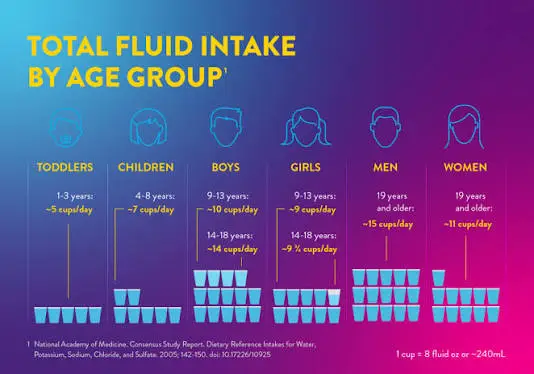
Children have smaller bodies but lose water quickly when they play and sweat. In the United States, total water guidelines range from about 1.3 litres a day for ages 1 to 3, to about 1.7 litres for ages 4 to 8 and around 2.1 to 2.4 litres for ages 9 to 13. Teenagers need about 2.3 to 3.3 litres depending on age and sex. Offer water with meals and after sport, and limit sugary drinks.
Adults
Most healthy adults fall in the ranges listed above. Your personal figure depends on body size, activity, climate and diet.
Older adults
As we get older, the feeling of thirst can become weaker. Some people also take medicines that affect fluid balance. Older adults may benefit from having drinks with every meal, keeping a bottle nearby and sipping through the day. If you care for an older relative, gentle reminders can help.
Pregnancy and breastfeeding
Needs increase during pregnancy and while breastfeeding. In the United States, the adequate total water intake is about 3.0 litres a day in pregnancy and about 3.8 litres a day while breastfeeding. Follow the advice of your midwife or doctor, because needs can differ.
A Simple Way to Estimate Your Own Number
Some people like a personal estimate. A common rule of thumb is about 30 to 35 millilitres of fluid per kilogram of body weight per day. This is not an official guideline, but it can be a helpful starting point.
- A 60 kilogram adult: about 1.8 to 2.1 litres
- A 70 kilogram adult: about 2.1 to 2.5 litres
- An 80 kilogram adult: about 2.4 to 2.8 litres
Add more for hot weather, exercise, fever, vomiting or diarrhoea. Reduce it if a doctor has told you to limit fluids.
What Counts Toward Your Daily Water Intake?
More things count than most people think.
Drinks that count
Plain water, sparkling water, herbal tea, regular tea, coffee, milk and diluted juice all contribute. Tea and coffee contain caffeine, which has a mild effect on urine production. However, studies suggest that moderate amounts of tea and coffee still add to your fluid intake. The NHS includes them in its fluid guidance.
Foods that count
Many foods contain a lot of water. Cucumber is about 95 percent water. Watermelon, strawberries, lettuce and celery are also high. Soups, stews, yoghurt and porridge add fluid too. If you want to eat more nourishing foods that help your body, see our guide to anti inflammatory foods and an easy weekly plan.
Drinks to limit
Sugary soft drinks, energy drinks and alcohol are not ideal ways to hydrate. Sugary drinks add extra calories, and alcohol can make you lose more fluid. Water, milk and unsweetened tea are better everyday choices.
Signs You Are Drinking Enough
The easiest check is your urine colour. Pale yellow, like light straw, is generally a good sign. Dark yellow or amber can suggest you need more fluid, although some vitamins and foods can change colour.
Other signs of good hydration include:
- You rarely feel very thirsty
- You pass urine regularly through the day
- Your mouth and lips feel comfortable
- You have steady energy
Signs of Dehydration to Watch For
Mild dehydration can cause:
- Thirst and a dry mouth
- Dark, strong smelling urine
- Headache
- Tiredness or dizziness
- Dry skin or lips
- Trouble concentrating
Severe dehydration is a medical issue. Signs include very little urine, a fast heartbeat, confusion, sunken eyes and extreme weakness. Babies, young children and older adults are at higher risk. If you or someone else shows severe symptoms, seek medical help straight away.
Image slot 2 goes here: a person drinking water after a walk (see Image Details below).
When You May Need More Water
Hot weather and humidity
In hot or humid weather, you sweat more. This is true in summer in Europe and the United States, and during the long hot months in much of Australia. Drink regularly, carry a bottle, and wear light clothing.
Exercise
During physical activity, drink before, during and after. For short sessions, water is enough. For long or intense exercise, such as running for more than an hour, you may also need electrolytes from food or a suitable sports drink. A dietitian or sports professional can guide you.
Illness
Fever, vomiting and diarrhoea cause fluid loss. Sip fluids often and consider oral rehydration solutions from a pharmacy. Seek medical advice if you cannot keep fluids down.
High altitude and air travel
Dry air and altitude can increase water loss. Drink water during flights and in the first days at a high location.
A high protein diet
If you eat a lot of protein, you may benefit from extra fluids. If you are curious about your protein needs, read our guide on how much protein you need a day.
Can You Drink Too Much Water?
Yes, although it is uncommon. Drinking a very large amount of water in a short time can dilute the sodium in your blood, a condition called hyponatremia. It can cause nausea, headache, confusion and, in serious cases, seizures. This has been seen in endurance events and in some cases of extreme water drinking.
For most people, drinking to thirst and spreading fluid across the day is safe. People with kidney disease, heart failure, liver disease or certain medications may have fluid limits. If you have a health condition, ask your doctor how much to drink.
12 Easy Ways to Drink More Water
If you struggle to drink enough, try these ideas.
- Start your day with a glass of water before coffee or tea
- Keep a reusable bottle at your desk, in your bag or in the car
- Set small goals, such as one glass with each meal
- Add lemon, cucumber, mint or berries for flavour
- Choose sparkling water if you like bubbles
- Drink a glass before you snack, in case you are thirsty rather than hungry
- Eat water rich foods such as soup, fruit and salad
- Use a bottle with time markings or a simple phone reminder
- Order water when eating out
- Sip herbal tea in the evening
- Pair drinking with habits, such as a glass after brushing your teeth
- Track your intake for a few days to learn your pattern
Hydration also supports good rest. For more ideas on evening routines, read our guide to how to sleep better at night, and browse our Lifestyle section for more wellness advice.
Image slot 3 goes here: a water bottle on a desk next to a laptop (see Image Details below).
Common Hydration Myths
Myth: Clear urine is always the goal
Very clear urine can mean you are drinking more than you need. Pale yellow is a good target for most people.
Myth: Coffee dehydrates you
Moderate coffee drinking does not cause dehydration for most people who are used to caffeine. It still counts toward your fluid intake.
Myth: You must drink water all the time, even when not thirsty
For healthy adults, thirst is a good guide in everyday life. Extra planning matters mostly in heat, during exercise, in older age or during illness.
Myth: Cold water is bad for you
There is no strong evidence that cold water harms healthy people. Drink the temperature you enjoy most, so you are more likely to drink enough.
Myth: Water alone makes you lose weight
Water has no calories and can replace sugary drinks, which may help. But water is not a weight loss cure. Be careful of any product or plan that promises quick results.
Frequently Asked Questions About Daily Water Intake
How many glasses of water should I drink a day?
Most people do well with about 6 to 8 glasses of fluid a day, as suggested by the NHS, or around 8 to 11 cups of total fluid depending on size and activity. Remember that food also provides water. Increase your intake in hot weather or when you exercise.
Does coffee or tea count as water?
Yes. Tea and coffee count toward your daily fluid intake. Caffeine has a mild diuretic effect, but the water in the drink outweighs it for most people who drink moderate amounts.
How much water should I drink a day to lose weight?
There is no special amount that causes weight loss. Drinking water instead of sugary drinks can help reduce calories, and a glass before a meal may help you feel fuller. Speak with a doctor or dietitian before starting a weight loss plan.
Is 3 litres of water a day too much?
For many active adults, 3 litres of total fluid per day is normal, especially if it includes drinks other than plain water and some comes from food. If you have a heart, kidney or liver condition, ask your doctor first.
What are the first signs of dehydration?
Thirst, dark yellow urine, a dry mouth, headache and tiredness are common early signs. Drink fluids and rest. If symptoms are severe or do not improve, contact a healthcare professional.
Final Thoughts
So, how much water should you drink a day? For most healthy adults, around 2 to 3.7 litres of total fluid, including food, is a sensible range. Use thirst, urine colour, climate and activity as your guide, and adjust when life changes. Keep a bottle nearby, enjoy water rich foods and do not stress about reaching a perfect number.
This article is for general information only and is not medical advice. Please speak to a qualified doctor or registered dietitian if you have a medical condition, take medication, are pregnant or have concerns about your hydration.
Sources and further reading: NHS: Water, drinks and hydration and Harvard T.H. Chan School of Public Health: The Nutrition Source, Water.