
If you wake up tired even after a full night in bed, you are not alone. Learning how to sleep better naturally is one of the most useful health habits you can build, and it does not need expensive gadgets. Small changes to your routine, your bedroom and your evenings can help you fall asleep more easily and feel more rested.
Quick answer: To sleep better naturally, keep a regular sleep and wake time, get daylight in the morning, limit caffeine after midday, switch off screens an hour before bed and keep your bedroom cool, dark and quiet. These habits support your body clock and make it easier to fall asleep.
This guide explains why sleep matters, how much you need and 10 simple habits you can start tonight. You can also find more everyday wellness advice in our Lifestyle section.
Why Good Sleep Matters
Sleep is when your body repairs itself and your brain sorts the information from your day. The US Centers for Disease Control and Prevention says adults need at least 7 hours of sleep each night, and it reports that about one in three adults in the United States do not get enough. You can read the full guidance on the CDC sleep page.
Poor sleep is linked with low mood, trouble concentrating and slower reaction times. Over many years it is also linked with a higher risk of long term health problems. The good news is that many sleep problems respond well to simple routine changes.
How Much Sleep Do You Need?
Needs vary from person to person, but most adults do best with 7 to 9 hours a night. Teenagers need more. Older adults often need a similar amount but may sleep more lightly.
A simple test is how you feel during the day. If you wake up without an alarm, feel alert by mid morning and do not depend on large amounts of caffeine, you are probably getting enough.
How to Sleep Better Naturally: 10 Habits to Try
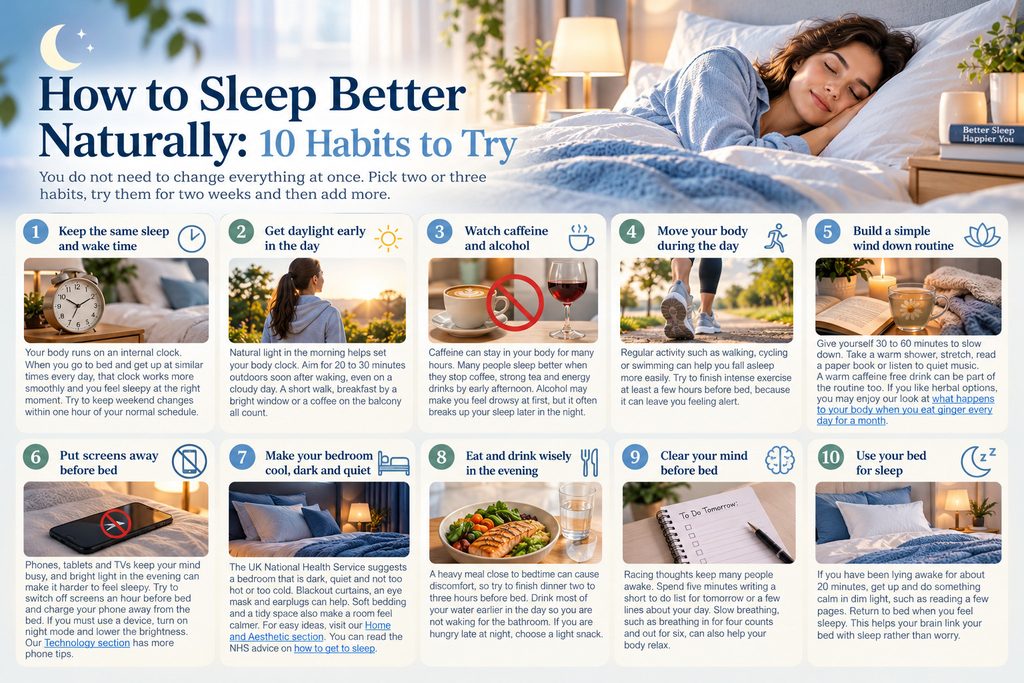
You do not need to change everything at once. Pick two or three habits, try them for two weeks and then add more.
1. Keep the same sleep and wake time
Your body runs on an internal clock. When you go to bed and get up at similar times every day, that clock works more smoothly and you feel sleepy at the right moment. Try to keep weekend changes within one hour of your normal schedule.
2. Get daylight early in the day
Natural light in the morning helps set your body clock. Aim for 20 to 30 minutes outdoors soon after waking, even on a cloudy day. A short walk, breakfast by a bright window or a coffee on the balcony all count.
3. Watch caffeine and alcohol
Caffeine can stay in your body for many hours. Many people sleep better when they stop coffee, strong tea and energy drinks by early afternoon. Alcohol may make you feel drowsy at first, but it often breaks up your sleep later in the night.
4. Move your body during the day
Regular activity such as walking, cycling or swimming can help you fall asleep more easily. Try to finish intense exercise at least a few hours before bed, because it can leave you feeling alert.
5. Build a simple wind down routine
Give yourself 30 to 60 minutes to slow down. Take a warm shower, stretch, read a paper book or listen to quiet music. A warm caffeine free drink can be part of the routine too. If you like herbal options, you may enjoy our look at what happens to your body when you eat ginger every day for a month.
6. Put screens away before bed
Phones, tablets and TVs keep your mind busy, and bright light in the evening can make it harder to feel sleepy. Try to switch off screens an hour before bed and charge your phone away from the bed. If you must use a device, turn on night mode and lower the brightness. Our Technology section has more phone tips.
7. Make your bedroom cool, dark and quiet
The UK National Health Service suggests a bedroom that is dark, quiet and not too hot or too cold. Blackout curtains, an eye mask and earplugs can help. Soft bedding and a tidy space also make a room feel calmer. For easy ideas, visit our Home and Aesthetic section. You can read the NHS advice on how to get to sleep.
8. Eat and drink wisely in the evening
A heavy meal close to bedtime can cause discomfort, so try to finish dinner two to three hours before bed. Drink most of your water earlier in the day so you are not waking for the bathroom. If you are hungry late at night, choose a light snack.
9. Clear your mind before bed
Racing thoughts keep many people awake. Spend five minutes writing a short to do list for tomorrow or a few lines about your day. Slow breathing, such as breathing in for four counts and out for six, can also help your body relax.
10. Use your bed for sleep
If you have been lying awake for about 20 minutes, get up and do something calm in dim light, such as reading a few pages. Return to bed when you feel sleepy. This helps your brain link your bed with sleep rather than worry.
A Simple Starter Plan for This Week
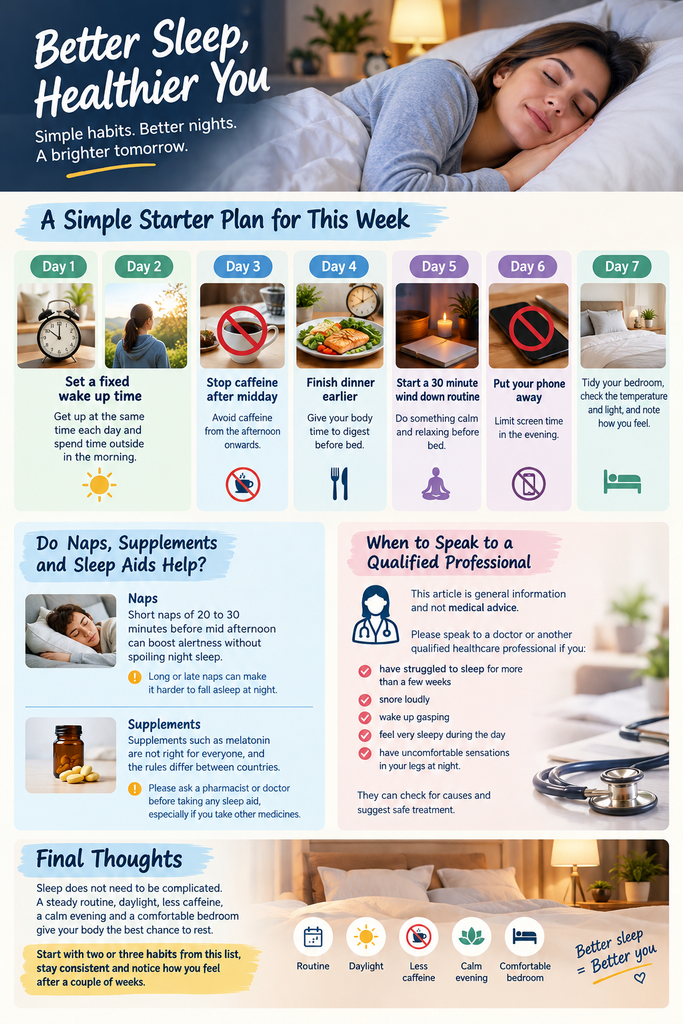
Days 1 and 2: choose a fixed wake up time and spend time outside in the morning. Days 3 and 4: stop caffeine after midday and finish dinner earlier. Days 5 and 6: start a 30 minute wind down routine and put your phone away. Day 7: tidy your bedroom, check the temperature and light, and note how you feel. Keep what works and adjust the rest.
Do Naps, Supplements and Sleep Aids Help?
Short naps of 20 to 30 minutes before mid afternoon can boost alertness without spoiling night sleep. Long or late naps can make it harder to fall asleep at night.
Supplements such as melatonin are not right for everyone, and the rules differ between countries. Please ask a pharmacist or doctor before taking any sleep aid, especially if you take other medicines.
When to Speak to a Qualified Professional
This article is general information and not medical advice. Please speak to a doctor or another qualified healthcare professional if you have struggled to sleep for more than a few weeks, snore loudly, wake up gasping, feel very sleepy during the day or have uncomfortable sensations in your legs at night. They can check for causes and suggest safe treatment.
Final Thoughts
Sleep does not need to be complicated. A steady routine, daylight, less caffeine, a calm evening and a comfortable bedroom give your body the best chance to rest. Start with two or three habits from this list, stay consistent and notice how you feel after a couple of weeks.
Frequently Asked Questions
How can I fall asleep faster naturally?
Follow a regular bedtime, avoid screens and caffeine late in the day and use a calming routine such as a warm shower or slow breathing. Keep your bedroom cool and dark. If you are still awake after about 20 minutes, get up and relax in dim light until you feel sleepy.
How many hours of sleep do adults need?
The CDC recommends at least 7 hours a night for adults. Most people feel their best with 7 to 9 hours, although needs differ from person to person.
Is it bad to use my phone before bed?
Phone use can keep your mind active, and bright light may delay sleepiness. Try to stop an hour before bed. If you need your phone, lower the brightness and use night mode.
Does exercise help with sleep?
Regular activity can support better sleep for many people. Try to finish hard workouts a few hours before bedtime, and use gentle movement such as stretching in the evening.
When should I see a doctor about sleep problems?
Speak to a doctor if poor sleep lasts for more than a few weeks, if you snore loudly or gasp at night, or if daytime tiredness affects your work, driving or mood.