Most of us know the feeling of lying awake at midnight, watching the clock and working out how few hours are left before the alarm. If you are searching for how to sleep better, you are in very good company. The US Centers for Disease Control and Prevention (CDC) reports that about one in three adults in the United States say they do not get enough rest or sleep. Poor sleep is a common complaint in every region, from the UK and Australia to the rest of Europe.
The good news is that sleep responds well to small, steady changes. This guide explains how to sleep better using habits that cost little and fit into normal life. You will learn how much sleep adults need, how to set up your bedroom, what to eat and drink in the evening, how to handle screens and stress, and when to ask a professional for help. Pick two or three ideas and start tonight.
The Short Answer: How to Sleep Better Tonight
To sleep better, keep a regular sleep and wake time, get morning daylight, avoid caffeine in the afternoon and heavy meals late at night, and make your bedroom cool, dark and quiet. Switch off screens an hour before bed and build a calm wind down routine. If problems last for weeks, speak to a doctor.
The rest of this guide explains each step in detail, so you can adapt it to your own home, job and family life.
How Much Sleep Do Adults Need?
The CDC recommends that adults get at least seven hours of sleep each night. Health bodies in the UK and Australia give very similar guidance, with most adults needing somewhere between seven and nine hours. Teenagers need more, usually eight to ten hours, while older adults often still need seven to eight hours even though their sleep tends to be lighter.
These numbers are a guide, not a test you can fail. Some people feel fine on seven hours, while others need closer to nine. A better question than “Did I get eight hours?” is “How do I feel during the day?” If you fall asleep within about 30 minutes, wake only briefly during the night and feel reasonably alert in the morning and afternoon, your sleep is probably doing its job.
Quality matters as much as quantity. Eight hours of broken sleep, with frequent waking from noise, light or discomfort, is not the same as eight hours of deep, steady rest. That is why the habits in this guide focus on both the length and the quality of your sleep.
Why Sleep Matters for Health, Mood and Focus
Understanding what sleep does for you makes it easier to protect it.
Sleep and your body
While you sleep, your body repairs tissue, balances hormones and supports your immune system. Your brain also sorts and stores the memories from the day. Over the long term, regularly short sleep has been linked in research to a higher risk of problems such as high blood pressure, type 2 diabetes and weight gain. A link is not proof of cause, but the pattern is consistent enough that major health groups treat sleep as a pillar of good health, alongside food and exercise.
Sleep and your mood
Even one short night can leave you more irritable, less patient and more anxious. Poor sleep makes it harder to manage stress, and stress makes it harder to sleep, which creates a frustrating loop. Breaking that loop is one of the most helpful things you can do for your emotional wellbeing.
Sleep and daily safety
Tired people react more slowly and make more mistakes. Drowsy driving is a recognised road safety problem in every country, and tiredness at work can lead to errors and accidents. If you often feel sleepy while driving, treat that as a warning sign and take it seriously.
How to Sleep Better: Build a Steady Sleep Schedule
If you only change one thing, change this. Your body runs on an internal clock, often called the circadian rhythm. It prefers a steady pattern and works best when you wake up and go to bed at roughly the same times every day.
Pick a wake up time first
Choose a wake up time that you can keep on most days, then count back seven to nine hours to find your target bedtime. A fixed wake up time is more powerful than a fixed bedtime because it anchors your body clock. Try to keep weekends within about an hour of your weekday time. A big lie in on Saturday and Sunday can leave you feeling as though you have flown across time zones, a pattern many people call social jet lag.
Shift your schedule in small steps
If your current pattern is far from your goal, move your bedtime earlier by 15 minutes every few nights rather than changing everything at once. Small steps are easier to keep, and your body adjusts more comfortably.
Do not stay in bed awake
If you have been lying awake for what feels like 20 minutes, get up, go to another dimly lit room and do something quiet, such as reading a paper book or listening to calm music. Return to bed only when you feel sleepy. This technique is a standard part of sleep therapy because it teaches your brain that bed means sleep, not worry. Turn the clock face away from you, because checking the time again and again raises stress and makes sleep harder to reach.
Set Up Your Bedroom for Better Sleep
Your bedroom should send one message to your brain: it is time to rest. A few simple changes can make a big difference, and many cost almost nothing. If you enjoy decorating, our Home & Aesthetic section has ideas for creating a calm, comfortable space that suits your style.
Keep the room cool
Many sleep experts suggest a bedroom temperature of roughly 16 to 19 degrees Celsius, which is about 60 to 67 degrees Fahrenheit. Your body temperature naturally drops as you fall asleep, and a cool room supports that process. Use breathable bedding made from cotton or linen and add or remove layers as needed.
Make it dark
Light tells your brain that it is daytime. Blackout curtains or blinds, a simple eye mask and covering small standby lights on electronics can all help. If you need to get up in the night, use a dim, warm nightlight rather than the main light.
Reduce noise
Sudden sounds can wake you even if you do not remember it the next morning. Try earplugs, a fan or a white noise machine. Steady background sound helps hide sudden noises such as traffic, neighbours and slamming doors.
Choose comfort
A mattress and pillows that suit your sleeping position matter more than price. Side sleepers often prefer a firmer pillow to keep the neck level, while back sleepers often prefer a thinner one. Replace pillows when they lose their shape and mattresses when they sag or cause aches in the morning. Keep your bed for sleep and relaxing, and avoid working there, so your brain links the bed with rest.
Food, Drink and Sleep: What to Have and When
What you eat and drink in the evening can help or harm your sleep, often in ways people do not notice.
Watch your caffeine
Caffeine is a stimulant, and it stays in your body longer than most people expect. Studies suggest the average half life of caffeine is around five to six hours, which means that an afternoon coffee can still be affecting you at bedtime. A simple rule is to stop caffeine by about 2 pm. Remember that tea, cola, energy drinks and even dark chocolate contain caffeine too.
Be careful with alcohol
A drink in the evening may help you fall asleep faster, but it tends to make sleep lighter and more broken later in the night. Alcohol also reduces the amount of REM sleep, the stage linked with dreaming and memory. If you drink, keep it moderate and finish at least three hours before bed.
Time your evening meal
A large, rich or spicy meal close to bedtime can cause discomfort and heartburn. Try to finish dinner two to three hours before bed. If you are hungry later, choose a light snack such as a banana, a small bowl of oats, plain yogurt or a slice of toast. A warm, caffeine free drink such as chamomile tea can also be a calming part of your routine. If you enjoy warm drinks, you may like our article on what happens to your body when you eat ginger every day for a month, which explains how this popular root fits into a daily routine.
Stay hydrated without overdoing it
Drink water steadily through the day, then taper off in the last hour or two before bed so that you are not woken by trips to the bathroom. Healthy habits around food and drink work best together, and you can find more ideas in our Lifestyle section.
Screens, Stress and the Wind Down Routine
Modern life keeps our brains switched on late into the evening. Learning how to switch off is a skill, and it can be practised.
Give screens a curfew
Bright light from phones, tablets and laptops can delay the release of melatonin, the hormone that signals night time to your body. The content matters too. News, social media and work email keep your mind alert and often stir up worry. Aim to put screens away about an hour before bed. If that is not realistic, turn on a night mode, lower the brightness and avoid stressful content. Charging your phone outside the bedroom removes the temptation to scroll at 2 am. For more practical advice on managing your devices, visit our Technology section.
Create a 30 minute wind down
A short, predictable routine tells your body that sleep is coming. It does not need to be fancy. You might try:
- Dimming the lights in your home
- Taking a warm shower or bath
- Gentle stretching or a few yoga poses
- Reading a paper book or listening to calm music
- Writing a short note about how your day went
Do the same steps in the same order each night. Over time, the routine itself becomes a powerful signal.
Quiet a racing mind
Many people lie awake because their thoughts are busy. Try a worry list earlier in the evening: write down what is on your mind and one small next step for each item. Then close the notebook and leave it for tomorrow. At bedtime, slow breathing can help. Breathe in through your nose for four seconds, then breathe out gently for six seconds, and repeat for a few minutes. Another option is a body scan, where you slowly relax each part of your body from your toes to your head.
Daytime Habits That Help You Sleep at Night
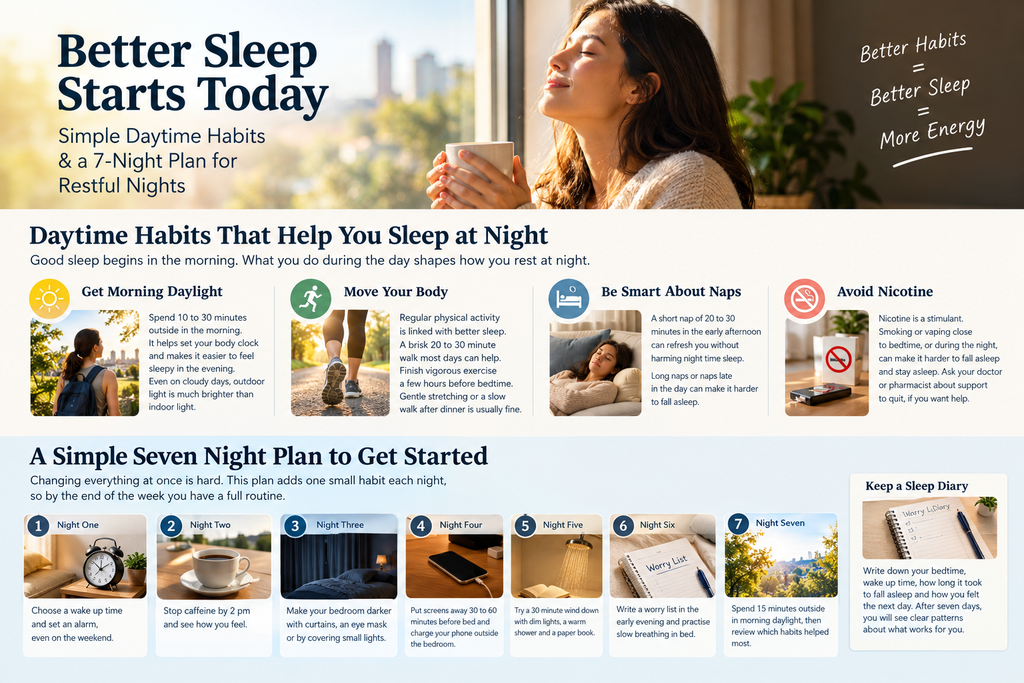
Good sleep begins in the morning. What you do during the day shapes how you rest at night.
Get morning daylight
Spending 10 to 30 minutes outside in the morning helps set your body clock and makes it easier to feel sleepy at the right time in the evening. On cloudy days, outdoor light is still much brighter than indoor light. If you work from home, take your first coffee to a window or step out for a short walk.
Move your body
Regular physical activity is linked with better sleep. Even a brisk 20 to 30 minute walk most days can help. Try to finish vigorous exercise a few hours before bedtime, since intense workouts late in the evening can leave some people feeling wired. Gentle stretching or a slow walk after dinner is usually fine.
Be smart about naps
A short nap of 20 to 30 minutes in the early afternoon can refresh you without harming night time sleep. Long naps or naps late in the day can make it harder to fall asleep. If you struggle with sleep at night, try cutting naps out for a week and see what changes.
Avoid nicotine
Nicotine is a stimulant. Smoking or vaping close to bedtime, or during the night, can make it harder to fall asleep and stay asleep. If you want support to quit, ask your doctor or pharmacist about the options available in your country.
A Simple Seven Night Plan to Get Started
Changing everything at once is hard. This plan adds one small habit each night, so by the end of the week you have a full routine.
- Night one: Choose a wake up time and set an alarm, even on the weekend.
- Night two: Stop caffeine by 2 pm and see how you feel.
- Night three: Make your bedroom darker with curtains, an eye mask or by covering small lights.
- Night four: Put screens away 30 to 60 minutes before bed and charge your phone outside the bedroom.
- Night five: Try a 30 minute wind down with dim lights, a warm shower and a paper book.
- Night six: Write a worry list in the early evening and practise slow breathing in bed.
- Night seven: Spend 15 minutes outside in morning daylight, then review which habits helped most.
Keep a simple sleep diary for the week. Write down your bedtime, wake up time, how long it took to fall asleep and how you felt the next day. After seven days, you will see clear patterns about what works for you.
When to Speak to a Qualified Professional
Self help habits are a great starting point, but they are not a substitute for medical care. Please speak to a doctor or another qualified health professional if:
- You have trouble sleeping at least three nights a week for three months or more
- You snore loudly, gasp or have pauses in your breathing during sleep, which can be signs of sleep apnea
- You feel strong urges to move your legs when you lie down
- You feel very sleepy during the day or while driving
- Poor sleep is affecting your mood, work or relationships
Cognitive behavioural therapy for insomnia, often shortened to CBT I, is recommended as a first treatment for long term insomnia by several medical bodies, including the American College of Physicians. It is a structured programme that teaches practical skills and does not rely on medicine. Always check with a doctor or pharmacist before taking supplements such as melatonin or sleep aids, especially if you take other medicines, are pregnant or have a health condition.
This article is general information and not medical advice. Please speak to a qualified health professional about any ongoing sleep problems. For more guidance, see the CDC’s sleep information for adults and the UK National Health Service guide to falling asleep faster and sleeping better.
Frequently Asked Questions About Sleep
How long should it take to fall asleep?
Most healthy adults fall asleep within about 10 to 20 minutes. Falling asleep in under five minutes can be a sign that you are very sleep deprived, while regularly taking more than 30 minutes may be worth discussing with a doctor.
Is it bad to sleep with my phone next to the bed?
It is not harmful in itself, but notifications, bright light and the habit of checking messages can interrupt your sleep. Put your phone on silent, face down and across the room if you can, or use a basic alarm clock instead.
Can I catch up on sleep at the weekend?
Partly. An extra hour or two can help you feel better, but large changes in your schedule can confuse your body clock. It is better to keep your sleep times fairly steady and add a short, early nap if you need one.
Do sleep trackers and apps really help?
They can help you notice patterns, such as late bedtimes or a link between caffeine and restless nights. Their detailed sleep stage readings are not always accurate, and checking them too often can create worry. Use them as a rough guide, not a verdict.
Does melatonin help me sleep?
Melatonin can help in certain situations, such as jet lag or shift work, but it is not right for everyone and rules about its sale differ between countries. Speak to a doctor or pharmacist before you try it, and avoid giving it to children unless a health professional recommends it.
Final Thoughts
Learning how to sleep better is less about one perfect trick and more about a handful of small habits repeated over time. Keep a steady schedule, make your bedroom cool, dark and quiet, watch caffeine and alcohol, give screens a curfew and enjoy some daylight each morning. Be patient with yourself, because it can take a couple of weeks for your body to adjust. If you are still struggling, getting professional help is a sensible and positive step.