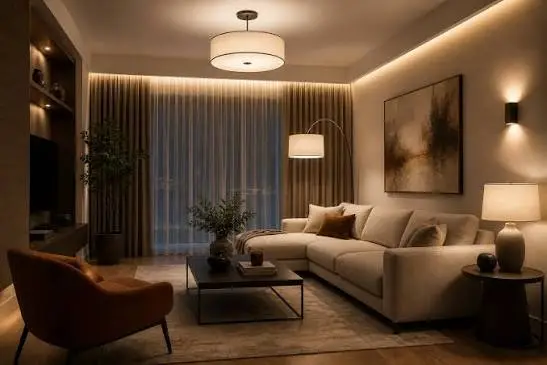
The best small living room lighting ideas use three layers of light: a soft overhead light for general brightness, lamps for comfort and one or two accent lights to highlight features. Choose warm white bulbs, place lamps at different heights and avoid a single harsh ceiling light. This makes a small room feel larger, calmer and more welcoming.
Lighting is the quiet hero of home design. You can buy beautiful furniture and paint the walls a perfect shade, yet a room can still feel flat and cramped if the light is wrong. In a small space, the effect is even stronger.
This guide shares practical small living room lighting ideas that work in apartments, terraced houses, studios and compact family homes across the USA, UK, Australia and Europe. You will learn the three layers of light, how to choose bulbs, where to place lamps, what it costs and which mistakes to avoid.
Why Lighting Matters So Much in a Small Living Room
In a small living room, you cannot hide behind big furniture or high ceilings. Lighting does much of the work. A single bright ceiling light flattens the room, throws hard shadows and makes corners look dark. The space ends up feeling smaller than it is.
Layered light does the opposite. When light comes from several places at different heights, your eye travels around the room. Corners glow, walls look further away and the whole space feels calmer. Interior designers rely on this trick in tiny city flats, studio apartments and compact family homes alike.
Good lighting is also one of the cheapest upgrades you can make. You do not need a renovation or an electrician. In many cases, two lamps, the right bulbs and a few minutes of planning are enough to change how the room looks and feels.
The Three Layers of Light Explained
Lighting designers describe every well lit room using three layers. You do not need to follow strict rules, but thinking in layers makes shopping and planning far easier.
Layer one: ambient light
Ambient light is the general glow that lets you see and move around. In most living rooms it comes from a ceiling fixture, a pendant light or recessed spotlights. In a small room, keep this layer soft and consider fitting a dimmer, so you can lower the brightness in the evening.
Layer two: task light
Task light helps you do something specific, such as reading, working on a laptop or sewing. A floor lamp beside the sofa or a table lamp near a desk works well. Place the light slightly behind or beside your shoulder so it falls on the page rather than into your eyes.
Layer three: accent light
Accent light adds depth and personality. It might be a small lamp on a shelf, a light that washes up a wall, a plug in sconce above a plant or an LED strip behind the television. Accent lights are usually low and gentle, and they make the room feel designed.
A simple target for a small living room is one ambient source, two task or lamp sources and one accent source. That gives you four points of light, which is plenty.
Choose the Right Bulbs: Warm vs Cool, Lumens and Dimming
Pick the right light tone
Bulb packaging lists a number in Kelvin, shown as K. This tells you how warm or cool the light looks.
- 2700K: soft warm white, similar to older halogen bulbs, best for living rooms and evenings.
- 3000K: a slightly crisper warm white, good if you like a modern look.
- 4000K: neutral white, better for kitchens and offices than for relaxing.
- 5000K and above: a cool daylight tone, which can feel harsh in a small lounge.
For most living rooms, stay between 2700K and 3000K. Use the same tone across every bulb, because mixing warm and cool bulbs makes a room look uneven.
How bright should it be?
Brightness is measured in lumens, not watts. A common rule of thumb is 10 to 20 lumens per square foot for a living room, which is roughly 100 to 200 lumens per square metre. A room of 150 square feet (about 14 square metres) therefore needs roughly 1,500 to 3,000 lumens across all lights combined.
Spread that total across several lamps instead of one bulb. Two lamps with 800 lumen bulbs and a ceiling light of about 1,000 lumens would cover the room comfortably.
Why LED bulbs are the smart choice
According to the U.S. Department of Energy, ENERGY STAR certified LED bulbs use at least 75 percent less energy than traditional incandescent bulbs and can last up to 25 times longer. You can read the details on the Energy.gov LED lighting page.
UK readers can find similar bulb and cost advice from the Energy Saving Trust. Look for bulbs marked dimmable if you plan to use a dimmer switch, because standard LED bulbs can flicker or buzz on dimmers.
Small Living Room Lighting Ideas by Layout
Narrow living rooms
Long, thin rooms can feel like corridors. Place lamps at both ends of the room, not just in the middle. This pulls the eye outwards and balances the space. A floor lamp by the sofa and a table lamp on a console near the door is a simple pair.
Apartments with only one ceiling light
Many rented homes come with a single central fitting that you cannot change. Switch its bulb to a warm LED, add a dimmer bulb if allowed, and then build the other layers with lamps. In many cases you will barely use the ceiling light again, apart from cleaning.
Low ceilings
Avoid heavy hanging pendants, which crowd the space. Choose flush or semi flush fittings, and use lamps that wash light upward onto the ceiling. Lit walls and ceilings create an impression of height.
Rooms with little daylight
If your living room faces a wall or sits below street level, use lighter wall shades, add a large mirror opposite the main light and choose lamp shades in white or cream so more light reaches the room. In dark winter months, keep windows clear of moisture too. Our guide on how to stop condensation on windows can help.
Rooms that double as a workspace
If you work from the sofa or a corner desk, add one dedicated task lamp with a neutral white bulb at about 3500K to 4000K. Keep the rest of the room warm, and switch the task lamp off at the end of the day.
Pick Lamp Styles That Suit a Small Space
Scale matters in a compact room. A bulky lamp base can eat up a side table, while a slim one leaves room for a book, a drink and a plant. Choose lamps with narrow bases and shades that suit the table or floor space you have.
Floor lamps with a slim pole or an arc that curves over the sofa are popular because they free up the surface area on tables. Arc lamps work well where you cannot run a ceiling cable above the seating area. Check that the base is heavy enough to stay stable in a busy home.
Wall sconces that plug in are another smart option. They sit above the sofa or beside a chair, use no floor space and add a layer of light at eye level. Pick ones with a switch on the cord, so you do not have to reach behind furniture.
Lamp shades change the mood. Fabric shades in white, cream or light linen soften the light and spread it evenly. Dark or thick shades block most of the light and make a room feel gloomy, so keep them for spaces where you want a dramatic look.
Finally, repeat one or two finishes. Brass, black or wood tones that appear in two or three lamps make the room look planned and calm, even when the lamps came from different shops.
Lamp Placement Rules That Always Work
Placement matters as much as the lamps themselves. These simple rules are used by home stylists and lighting designers every day.
- Use different heights: combine one low table lamp, one tall floor lamp and one light at eye level.
- Think in triangles: place three light sources so they form a rough triangle around your seating area.
- Light the corners: dark corners make a room look smaller, so put at least one lamp in a corner.
- Hide the bare bulb: use shades so you do not see the bulb when seated.
- Mind the television: a gentle glow behind the screen reduces eye strain and looks neat.
- Balance both sides: avoid putting every lamp on one side of the room.
Use Mirrors, Wall Shades and Surfaces to Multiply Light
Light does not only come from bulbs. It also bounces off the walls, floor and furniture. In a small living room, smart surface choices can make every lamp work harder.
Light, matte wall shades such as soft white, warm cream or pale sage reflect more light than deep, dark shades. If you love a moody dark wall, balance it with extra lamps and lighter textiles.
Mirrors are the classic trick. Hang one where it can catch light from a window or lamp, but avoid placing it so it shows a messy corner or a bright bare bulb. A mirror opposite a window doubles the daylight. A mirror beside a lamp makes that lamp feel twice as strong.
Glass or metal tables, glossy trays and metallic frames add small sparkles of reflection. Heavy curtains do the reverse. Swap them for sheer or light linen curtains in the day, and close thicker layers only at night.
Even the floor matters. A light rug or pale wood floor bounces light back up into the room. If you have a dark floor, a large light rug under the seating area can lift the whole space.
What Lighting Upgrades Cost
Prices vary by country and store, so treat these figures as rough guides in US dollars.
- Warm LED bulbs: about 2 to 8 dollars each.
- Dimmer switch or dimmable bulbs: about 10 to 40 dollars.
- Table lamp: about 20 to 80 dollars.
- Floor lamp: about 30 to 150 dollars.
- Plug in wall sconce: about 25 to 80 dollars.
- LED light strip: about 15 to 40 dollars.
- Smart bulbs: about 10 to 25 dollars each.
A complete refresh for a small room, with two lamps, four warm bulbs and an accent strip, can often be done for 100 to 250 dollars. Second hand lamps and new shades are an easy way to save.
Renter Friendly Lighting Ideas
Renting does not mean living with bad lighting. Everything below can be taken with you when you move.
- Use plug in wall sconces with a cord cover or cable clips.
- Add clip on lamps to shelves or bookcases.
- Place battery powered LED puck lights under shelves or inside cabinets.
- Use LED strips with removable adhesive behind the television or along a shelf. Test a small patch first.
- Swap lamp shades to change the look without buying new lamps.
Always check your lease before drilling or changing any wiring. Plug in options are the safest and easiest.
Smart Lighting and Evening Routines
Smart bulbs let you change brightness and tone from your phone or voice assistant. They are useful for creating a bright mode for tidying and a soft mode for movies.
Light also affects sleep. Harvard Health notes that bright, blue rich light in the evening can reduce the body’s production of melatonin. Switching to warm, dim lamps in the last hour before bed is an easy habit. Our guide on how to sleep better naturally has more calm evening tips.
If you enjoy gadgets, browse our technology section for smart home ideas, but keep in mind that a simple dimmer and warm bulbs already do most of the job.
Common Lighting Mistakes to Avoid
- Relying on one bright ceiling light. It flattens the room and creates harsh shadows.
- Mixing very different bulb tones. Warm and cool bulbs side by side look messy.
- Choosing cool white bulbs for a relaxing room. They can feel clinical.
- Using shades that are too dark. They trap light instead of spreading it.
- Forgetting dimmable bulbs. A standard LED bulb on a dimmer may flicker or buzz.
- Putting all lamps on one side. The far side of the room will feel gloomy.
- Leaving cables on show. Use clips or covers to keep lines tidy.
Final Thoughts: Start With Two Lamps and Warm Bulbs
Great small living room lighting ideas do not need a big budget. Replace harsh bulbs with warm ones, add two lamps at different heights, light at least one corner and use a mirror to bounce the glow around. These small steps often change a room more than new furniture would.
If you want more inspiration for your home, explore the full Home & Aesthetic section for decor ideas, simple home hacks and cleaning tips.
Frequently Asked Questions
What is the best lighting for a small living room?
The best setup uses three layers: a soft overhead light, one or two lamps for comfort and reading, and a small accent light. Choose warm white LED bulbs between 2700K and 3000K, and add a dimmer so you can adjust the mood from bright to relaxed.
How many lamps does a small living room need?
Most small living rooms feel balanced with two or three lamps plus the main ceiling light. Place them at different heights and on different sides of the room so that light reaches every corner. You can add one accent light if you want extra depth.
What bulb tone is best for a living room?
Warm white bulbs from 2700K to 3000K suit most living rooms because they feel soft and inviting. Neutral white around 4000K works for a desk or task lamp. Keep the tones consistent across the room so the light looks even.
Can good lighting make a small room look bigger?
Yes. Layered light removes harsh shadows, brightens corners and draws the eye to the edges of the room, which makes walls feel further away. Light wall shades and mirrors that reflect lamps or daylight add to the effect.
How much does it cost to improve living room lighting?
A basic upgrade with warm LED bulbs and one lamp can cost under 50 dollars. A fuller refresh with two lamps, new bulbs, a dimmer and an accent strip is often 100 to 250 dollars, depending on your country and the stores you choose.