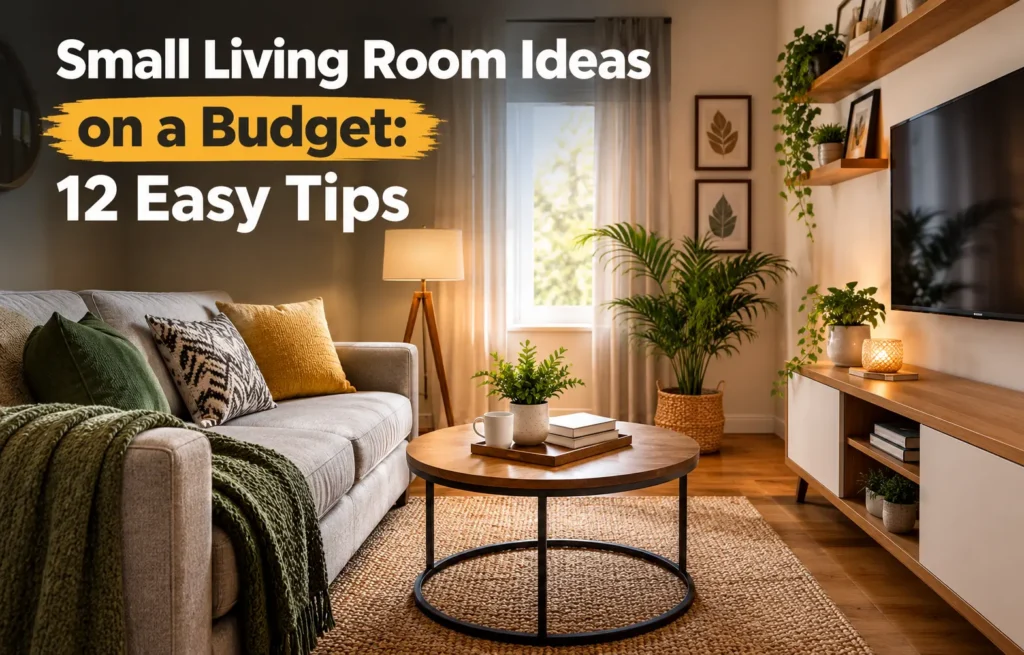
A small living room does not have to feel cramped. With the right layout, a few smart buys and some simple habits, you can find small living room ideas on a budget that make the space feel brighter, bigger and more comfortable. Most of the ideas below cost very little, and several cost nothing at all.
Quick answer: To make a small living room feel bigger on a budget, declutter first, use light wall tones, hang a mirror opposite a window, choose furniture with raised legs and add storage that works hard. Warm lighting and a few good accessories finish the look without a big spend.
This guide shares 12 practical ideas you can try this weekend. For more inspiration, browse our Home and Aesthetic section.
Why Small Living Rooms Feel Even Smaller
A room feels cramped when it is crowded, dim or full of heavy pieces. Too much furniture blocks walking space. Dark walls and thick curtains absorb light. Lots of small items on every surface make the eye jump around and the room feel busy.
The good news is that the fixes are simple. Clear surfaces, bounce light around and choose pieces that fit the scale of the room. The way a space looks also affects how we feel in it, which our Style Psychology section explores in more detail.
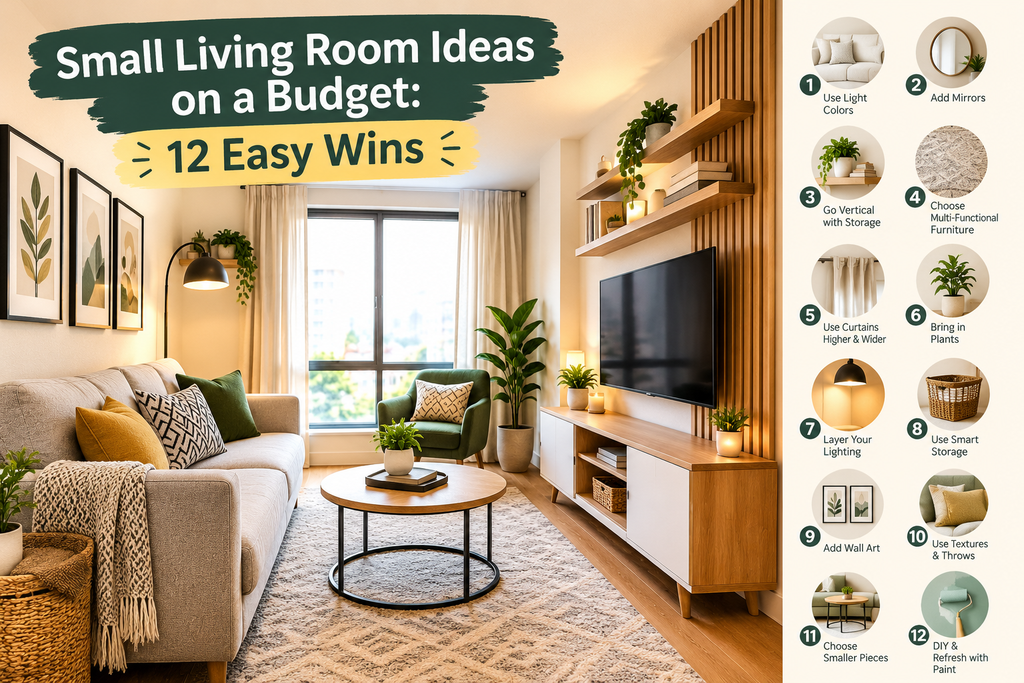
Small Living Room Ideas on a Budget: 12 Easy Wins
1. Declutter before you buy anything
Start with a free step. Remove anything you do not use, love or need in the room. Clear the coffee table, the floor and the top of shelves. Put loose items in one box and sort it later. A calm, clear room always looks larger than a full one, even before you change a single piece of decor.
2. Choose light, warm wall tones
Soft white, cream, light stone and pale sage reflect light and make walls seem to step back. Painting the ceiling and trim in the same light tone as the walls creates a smooth look with fewer visual breaks. A small tin of paint is one of the cheapest ways to change a room.
3. Hang a large mirror opposite or beside a window
Mirrors bounce daylight deeper into the room and give an impression of extra space. A large mirror leaning on the wall or hung at eye level works best. Second hand shops and online marketplaces are good places to find framed mirrors at low prices.
4. Pick furniture with raised legs
Sofas, chairs and cabinets that sit on slim legs let you see the floor underneath. This creates a lighter, more open feeling than heavy pieces that sit directly on the ground. If your current sofa is bulky, even adding taller legs can help.
5. Match furniture size to the room
One well sized sofa is better than a large sofa and two extra chairs. Measure your room and your doorway before you buy. A two seater or a compact sofa often leaves enough space for a small side table and a clear walking path. Aim to keep a path of about 3 feet or 90 cm wide through the room.
6. Use furniture that does two jobs
A storage ottoman can be a seat, a footrest and a hiding place for blankets. A lift top coffee table gives you a desk and storage in one. Nesting tables can be tucked away when you do not need them. These pieces keep the room tidy and save you from buying extra furniture.
7. Go vertical with shelves and curtains
When floor space is limited, use the walls. Tall bookcases and wall mounted shelves hold books and decor without taking up much room. Hang curtains close to the ceiling and let them fall from there to the floor. This draws the eye upward and makes the ceiling feel higher.
8. Layer your lighting
One harsh ceiling light makes a small room feel flat. Add a floor lamp and a table lamp with warm white bulbs to create soft pools of light. The US Department of Energy says LED bulbs use at least 75 percent less energy than traditional incandescent bulbs, so they are a smart low cost choice. You can read more in its guide to lighting choices that save you money.
Smart bulbs and plugs let you control lamps from your phone, and our Technology section covers easy smart home ideas. If you use them, a steady connection matters. Before you hide your router behind a bookcase, read our guide to strange household things that block WiFi signals.
9. Hide cables and visual clutter
Tangled cables make a room look messy. Use cable clips, a cord cover or a small box to keep them out of sight. Baskets with lids are a cheap way to hide remote controls, chargers and toys. Keep your TV area simple, with just a few chosen items on display.
10. Choose one rug that fits
A rug that is too small makes a room look broken up. Pick a rug large enough for at least the front legs of your sofa and chairs to sit on it. A light tone or a simple pattern works best in a small space because it feels open and calm.
11. Display fewer, larger pieces
Many tiny ornaments create visual noise. Group items in threes, choose a few larger pieces and leave some empty space. One big plant, a framed print or a single bold vase has more impact than ten small items. Empty space is part of good design.
12. Shop second hand and upcycle
Second hand furniture often costs far less than new and is usually well built. A coat of paint or new handles can give an old cabinet a fresh look. Check local charity shops, community groups and online marketplaces. Always measure first so your find fits the space.
Easy Layout Rules for Small Living Rooms
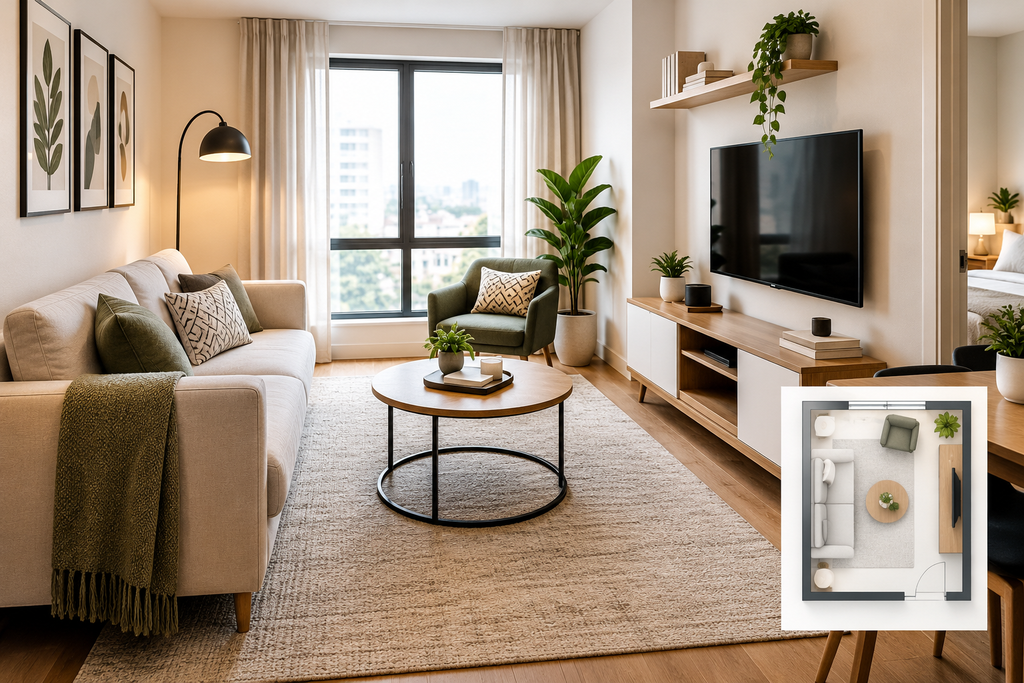
Good layout is free, and it makes a big difference. Try these simple rules:
- Keep the main walking path clear from the door to the seating area.
- Place your largest piece, usually the sofa, against the longest wall.
- Leave a little space between furniture and walls only if the room allows it.
- Put tall pieces at the edges of the room, not in the middle.
- Position seating so people can talk easily, even in a small space.
Move your furniture around on paper first, or use a free room planner app, so you do not strain your back for nothing.
How Much Do These Changes Cost?
You can spread the spending over time. Here is a simple way to plan it:
- Free: declutter, rearrange furniture, move lamps and mirrors you already own.
- Low cost: warm white LED bulbs, baskets, cable clips, cushions and a plant.
- Medium cost: a tin of paint, a well sized rug, wall shelves and a second hand mirror.
- Larger spend: a new compact sofa or a storage coffee table. Wait for a sale or search second hand first.
Start with the free and low cost steps. You may find the room already feels very different.
Common Mistakes to Avoid
- Buying furniture before measuring the room and the doorway.
- Using many small items instead of a few larger ones.
- Choosing heavy, dark curtains that block daylight.
- Ignoring storage, which leads to clutter on every surface.
- Using only one overhead light.
Final Thoughts
You do not need a large budget or a large room to create a living room you enjoy. Start by clearing space, then bring in light through paint, mirrors and lamps. Choose furniture that fits the room and works hard, and keep decor simple. Small steps add up, and each one makes the room feel more open.
Frequently Asked Questions
How can I make a small living room look bigger?
Declutter, use light wall tones, hang a mirror opposite a window, choose furniture with raised legs and add warm lighting. Keep walking paths clear and use vertical storage so the floor stays open.
What colour makes a small living room look bigger?
Light, warm tones such as soft white, cream, light stone and pale sage reflect more light and make walls seem further away. Using the same tone on the walls, ceiling and trim also helps the room feel more open.
How do I decorate a small living room cheaply?
Start with free changes such as decluttering and rearranging. Then add low cost items such as warm white LED bulbs, baskets, cushions and a plant. Buy second hand furniture and mirrors, and use paint to refresh old pieces.
What size sofa is best for a small living room?
A two seater or compact sofa with raised legs usually works well. Measure your room and doorway first, and make sure you can keep a clear walking path of about 3 feet or 90 cm.
Do mirrors really make a room look bigger?
Yes, in most cases. A large mirror reflects daylight and the view across the room, which creates a feeling of depth. Placing it opposite or beside a window gives the best effect.