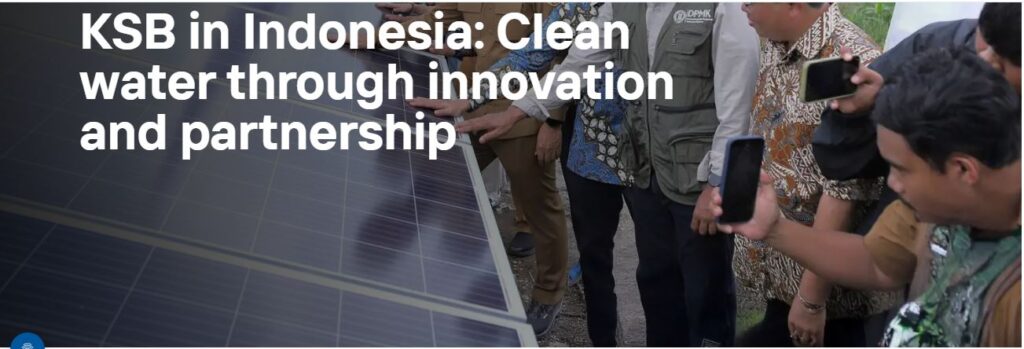
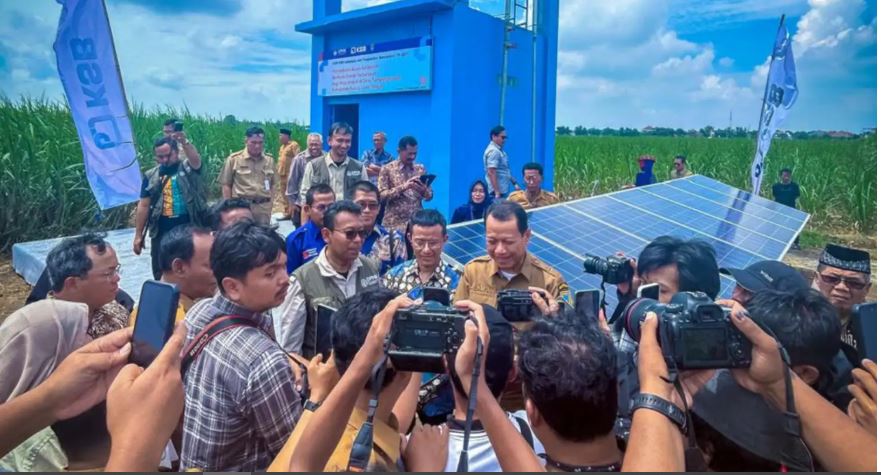
Tumpangkrasak village near Kudus now has reliable access to safe drinking water after a joint project by KSB Indonesia and Institut Teknologi Bandung (ITB) installed a solar‑hybrid deep well, storage tower and community-run distribution system. The scheme, inaugurated in December 2025, replaces contaminated shallow wells and delivers cleaner, more dependable water to 1,136 residents.
Previously, villagers drew brownish, metallic‑smelling water from shallow wells that sat close to household septic tanks, causing bacterial contamination that laboratory tests found positive for E. coli, Salmonella and other harmful microbes. The new system draws groundwater from around 80 metres, uses modern pumping and storage, and pairs photovoltaic panels with the grid so the supply remains consistent even during outages.
Project overview and objectives
Design and technology
- Deep well: Drilled to approximately 80 metres to reach a protected aquifer and avoid contamination common in shallow sources.
- Pumping equipment: Submersible CORA‑1C/21 pump with UMAISOL 100‑0.75/22‑I motor installed at ~30 metres depth for reliable extraction.
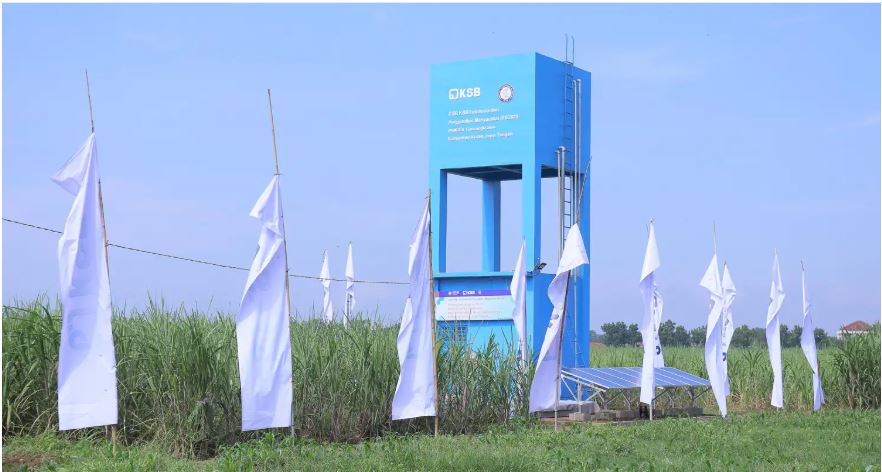
- Hybrid energy: Photovoltaic panels serve as the primary power source, with the public grid as backup; a VSD frequency inverter panel automatically switches and controls pump operation.
Storage and distribution
- Water tower: An 18.8‑cubic‑metre storage tank mounted about 10 metres high provides gravity pressure to the network.
- Network: HDPE pipelines supply safe water to a neighbourhood of 1,136 people, reducing dependence on individual boreholes and contaminated wells.
Community management and sustainability
Governance and financing
- Village ownership: The system is managed by a village‑owned enterprise (BUMDES) and a local water committee to ensure long‑term operation, accountability and revenue generation.
- Capacity building: Training in management and financial reporting equips the committee to operate, maintain and finance the system sustainably.
- CSR and partnership model: The project was selected using data from the Ministry of Villages and implemented through collaboration between ITB (technical expertise), KSB Indonesia (technology and CSR support), and local government.
Impact on daily life
- Health improvements: Safer water reduces exposure to bacteria like E. coli and Salmonella, lowering waterborne disease risk.
- Reliability and convenience: Hybrid power and storage deliver consistent pressure and supply, easing household chores and hygiene.
- Economic benefits: Local management allows the village to charge affordable fees that cover maintenance and create income for BUMDES.