Walk down any cleaning aisle and you will see dozens of sprays, each with a long list of ingredients. It is no surprise that more people are looking for simpler options. Natural cleaning uses everyday items such as white vinegar, baking soda, lemon and mild soap to keep a home fresh and tidy. It can save money, reduce plastic waste and cut down on strong chemical smells.
But natural does not always mean safe or effective for every job. Some mixes can be harmful, and some surfaces can be damaged by common kitchen ingredients. This guide shows you what works, where to use it, what to avoid and how to mix simple recipes safely.
Quick Answer: What Is Natural Cleaning?
Natural cleaning means using simple, low cost ingredients such as white vinegar, baking soda, lemon juice and mild dish soap instead of strong commercial products. It works well for everyday grime, limescale, grease and odours. It is not a replacement for a proper disinfectant when you need to kill germs, and some ingredients must never be mixed.
Cleaning, Sanitising and Disinfecting: What Is the Difference?
These words are often used as if they mean the same thing, but they do not.
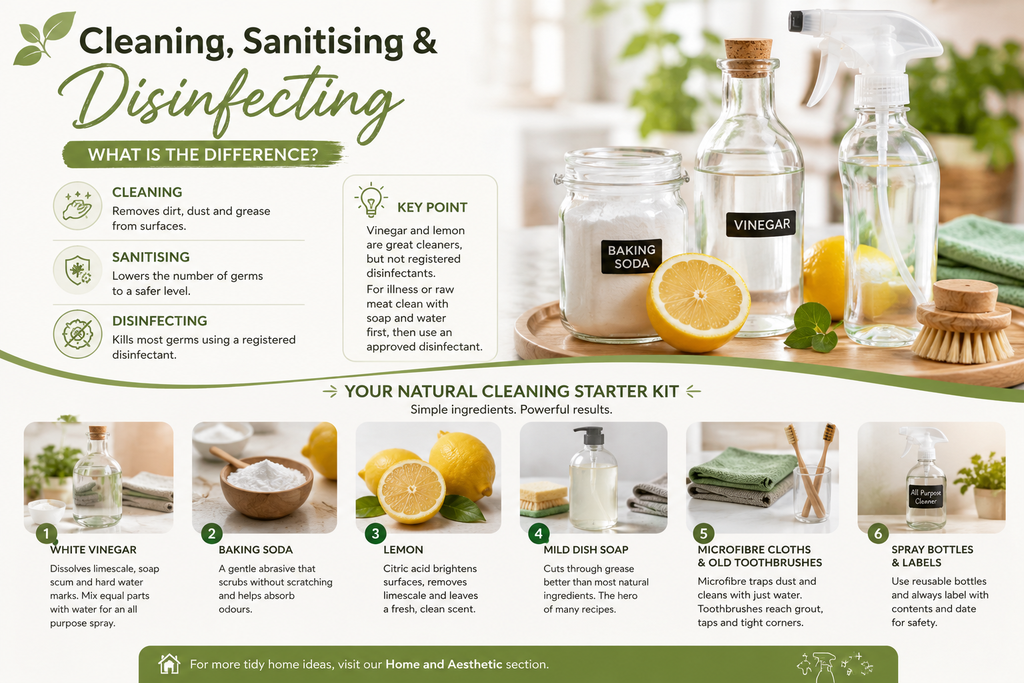
Cleaning removes dirt, dust and grease from a surface. Soap, water and a cloth are enough for most daily jobs.
Sanitising lowers the number of germs to a safer level. It is common in kitchens and for baby items.
Disinfecting kills most germs on a surface using a registered disinfectant. The US Centers for Disease Control and Prevention explains that cleaning first, then disinfecting when needed, is the best approach during illness.
Here is the key point. White vinegar and lemon juice are good cleaners, but they are not registered disinfectants. If someone in your home has a stomach bug, or you are cleaning up after raw meat, use hot soapy water first and then an approved disinfectant, following the label. The US Environmental Protection Agency has helpful information on safer products on its Safer Choice page.
Your Natural Cleaning Starter Kit
You only need a few items. Most of them are probably already in your kitchen.
White Vinegar
Vinegar contains acetic acid, which dissolves limescale, soap scum and hard water marks. A mix of equal parts vinegar and water is a popular all purpose spray. The smell fades as it dries.
Baking Soda
Baking soda, also called bicarbonate of soda, is a gentle abrasive. It scrubs without scratching most surfaces and helps absorb odours.
Lemon
Lemon juice contains citric acid, which brightens surfaces, loosens limescale and leaves a fresh scent. It is especially useful in kettles, on taps and for the inside of the microwave.
Mild Dish Soap
A small amount of washing up liquid cuts through grease better than most natural ingredients. It is the hero of many recipes.
Microfibre Cloths and Old Toothbrushes
Good tools make any cleaner work better. Microfibre cloths trap dust and can clean glass with only water. An old toothbrush reaches grout, taps and tight corners.
Spray Bottles and Labels
Use clear, reusable bottles. Always label them with the contents and the date. This keeps everyone in the house safe.
For more tidy home ideas, visit our Home and Aesthetic section.
Mixes You Must Never Make
Safety comes first. Some combinations release harmful gases or create strong acids. Remember these rules.
Never mix bleach with vinegar. This can release chlorine gas, which can irritate the eyes, nose and lungs.
Never mix bleach with ammonia. This creates toxic fumes. Some glass cleaners contain ammonia, so check labels.
Never mix hydrogen peroxide with vinegar in the same container. The combination can form peracetic acid, which can irritate or burn skin and lungs. If you use both, apply them one after the other, rinsing in between.
Never mix different commercial cleaning products together. Use one at a time and rinse the surface.
Always ventilate the room by opening a window, keep products in their original containers where possible and keep all cleaners away from children and pets. If you think someone has swallowed or breathed in a harmful product, contact your local poison centre or emergency services straight away. In the United States, America’s Poison Centers offer guidance at poison.org.
Where Not to Use Vinegar and Lemon
Acids can damage some materials, so avoid them on the following surfaces.
Natural stone such as marble, granite, limestone and travertine can become dull or etched. Use a pH neutral stone cleaner or a drop of mild soap in warm water.
Unsealed or waxed wooden floors and furniture can lose their finish. Wipe with a slightly damp cloth and a gentle wood cleaner.
Rubber seals and gaskets, such as those on dishwashers and washing machines, may wear if soaked in vinegar often. Check your appliance manual first.
Electronic screens should be cleaned only with a soft, dry microfibre cloth, or with a product that the manufacturer recommends.
Cast iron and some metals may be affected by acid, so wash them with mild soap and dry well.
When unsure, test any cleaner on a small, hidden area first.
5 Simple Natural Cleaning Recipes
These recipes are easy to make and use items from your kitchen.
1. All Purpose Spray
Mix half a cup (120 ml) of white vinegar with half a cup (120 ml) of water in a spray bottle. Add a few drops of dish soap for greasy surfaces. Use it on sealed worktops, tiles, the cooker top and the outside of appliances. Do not use it on natural stone or unsealed wood.
2. Gentle Scrub Paste
Mix three parts baking soda with one part water to make a thick paste. Rub it on stained sinks, baths, oven doors or burnt pans, leave for 10 to 15 minutes, then scrub gently and rinse well. For heavy oven stains, leave the paste on overnight and wipe it off the next day.
3. Kettle and Tap Descaler
For a kettle, fill it halfway with equal parts water and white vinegar, bring it to the boil and leave it for about 20 minutes. Pour it away, rinse the kettle and boil clean water twice before use. Citric acid or lemon juice also works. For taps, wrap a cloth soaked in vinegar around the limescale for about 30 minutes and wipe it clean.
4. Fresh Microwave Clean
Put a bowl of water with a few lemon slices inside the microwave and heat it for three minutes. Leave the door closed for five more minutes so the steam loosens the dried food. Then wipe the inside with a cloth. Be careful when removing the hot bowl.
5. Streak Free Glass Spray
Mix equal parts water and white vinegar. Spray lightly and wipe with a clean microfibre cloth. Work in shade, because direct sun dries the liquid too quickly and leaves streaks.
Natural Cleaning Room by Room
The Kitchen
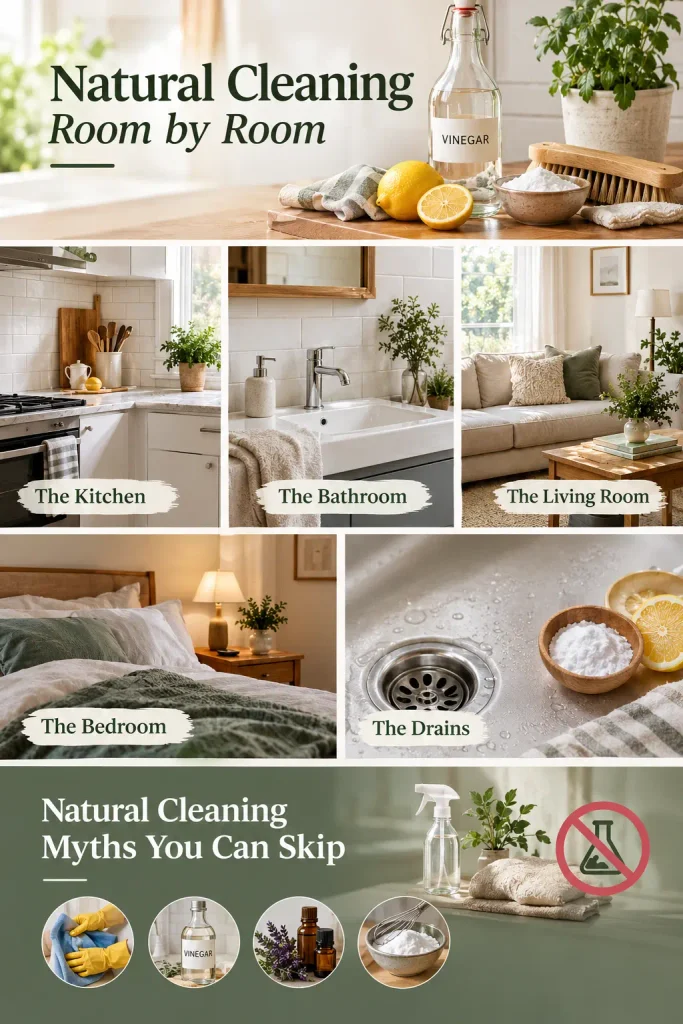
The kitchen needs the most frequent attention. Wipe worktops with hot soapy water after cooking, then use a spray only when needed. Clean the fridge shelves with warm water and a little baking soda, and place an open bowl of baking soda inside to absorb odours. Freshen your chopping boards by scrubbing them with half a lemon dipped in coarse salt. If you love useful kitchen hacks, you may enjoy our article on why you should not pour out boiled egg water.
The Bathroom
Soap scum and limescale are the main problems. Spray the shower screen with equal parts vinegar and water, leave for a few minutes and wipe it away. Use the baking soda paste on the tub and sinks. Squeegee shower doors after use and leave a window or fan on to reduce damp and mould. Do not use vinegar on natural stone tiles.
The Living Room
Dust from top to bottom with a damp microfibre cloth, because a dry cloth can push dust into the air. Sprinkle baking soda on sofas and carpets, leave for 15 minutes and vacuum it up to lift odours. Test on a hidden spot first to make sure it does not mark the fabric. A tidy room is also easier to keep clean, and our guides on organising and decorating can help.
The Bedroom
Wash sheets weekly in a warm wash, if the label allows, and air your duvet and pillows regularly. Vacuum the mattress now and then and let it air in the sun when possible. Keep clutter off the floor so it is easy to clean underneath.
The Drains
To freshen a slow smelling drain, pour half a cup of baking soda into it, followed by half a cup of vinegar. Let it fizz for about 15 minutes, then flush with hot water. This helps with light odours but will not clear a serious blockage. Avoid mixing it with commercial drain cleaners, and call a plumber if the problem continues.
Natural Cleaning Myths You Can Skip
Myth one: natural products are always safe. Even natural ingredients can irritate skin and lungs if used in a closed room or in strong amounts. Wear gloves and ventilate.
Myth two: vinegar kills every germ. It does not. It can help with some bacteria, but it is not an approved disinfectant.
Myth three: essential oils make everything cleaner and safer. They add scent but little cleaning power, and some oils such as tea tree can be harmful to cats and dogs. If you have pets, avoid them or ask a vet.
Myth four: mixing more ingredients gives a stronger cleaner. Some mixes cancel each other out. For example, baking soda and vinegar fizz dramatically but neutralise each other, so the mix is often weaker than using each one on its own.
A Simple Weekly Cleaning Routine
A routine saves time and keeps jobs small.
Daily: wipe the kitchen worktops, rinse the sink, make the bed and put away clutter.
Twice a week: vacuum or sweep high traffic floors and wipe the bathroom sink.
Weekly: clean the toilet, shower, mirrors, kitchen surfaces and floors, and change bed sheets and towels.
Monthly: descale the kettle and taps, wipe cupboard doors, clean the fridge, wash curtains and vacuum under furniture.
If you want to cut cleaning time further, smart gadgets such as robot vacuums can help. You can read more in our Technology section.
Eco and Budget Benefits
Natural cleaning can lower your costs. A large bottle of white vinegar and a box of baking soda cost little and make many bottles of spray. Reusing glass or sturdy plastic bottles also cuts waste. Washable cloths replace disposable wipes, and you can save the peel from lemons to infuse vinegar for a fresher scent.
Still, balance matters. Use natural cleaners for daily jobs and keep a regular disinfectant for times when germs are a concern. For more healthy home habits, take a look at our Lifestyle section.
Final Thoughts
Natural cleaning is simple, affordable and gentle on your home when you use it correctly. Keep a few basic ingredients, learn which surfaces to protect and never combine products that react badly. Start with one recipe this week, such as the all purpose spray or the kettle descaler, and build a routine from there. A clean home does not have to smell of strong chemicals to feel fresh.
Frequently Asked Questions
Does vinegar really clean and disinfect?
Vinegar is a good cleaner for limescale, soap scum and light grease, but it is not a registered disinfectant. For illness or raw meat spills, clean first, then use a proper disinfectant following the label.
Can I mix baking soda and vinegar for cleaning?
Yes, but the fizz neutralises both ingredients, so the mixture is not stronger. It can help loosen light drain odours or lift grime for a short time, but using each ingredient separately is usually more effective.
What should I never mix when cleaning?
Never mix bleach with vinegar or ammonia, and never mix hydrogen peroxide and vinegar in one container. Do not combine different commercial cleaning products. Always ventilate the room.
Is natural cleaning safe for pets and children?
Ingredients like vinegar and baking soda are generally milder than harsh chemicals, but they can still irritate. Keep all products out of reach, rinse surfaces and avoid essential oils such as tea tree around pets.
What surfaces should I avoid cleaning with vinegar?
Avoid natural stone like marble and granite, unsealed or waxed wood, rubber seals and electronic screens. Acid can dull or damage them, so use a mild soap and water or a product recommended for the material.