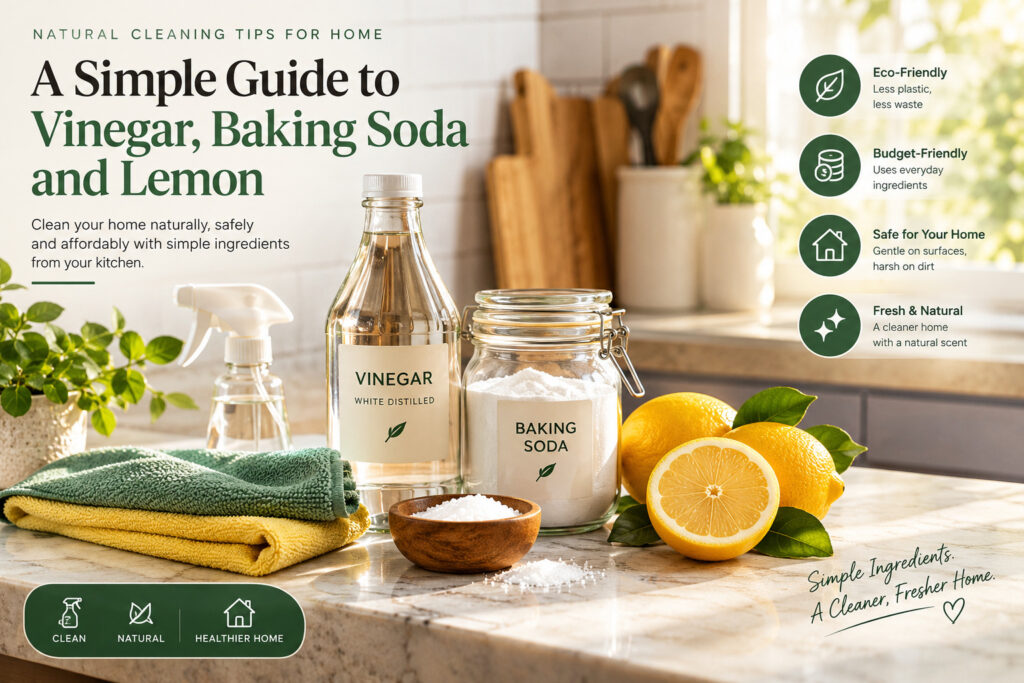
A fresh, tidy home does not need a cupboard full of harsh chemicals. With a few simple ingredients from your kitchen, you can clean most surfaces safely and cheaply. These natural cleaning tips explain what works, where to use it and, just as important, what to avoid. You will find easy recipes, room by room advice and a weekly plan that keeps your space looking calm and stylish without extra effort.
Quick answer: The best natural cleaning tips use white vinegar for limescale and glass, baking soda for scrubbing and smells, lemon for stains and fresh scent, and mild dish soap for grease. Never mix vinegar with bleach, and avoid vinegar on natural stone. These products clean well but do not replace a proper disinfectant.
Why Choose Natural Cleaning Tips?
More households are switching to simpler cleaning routines, and the reasons are easy to understand. Natural products are often cheaper, they cut down on plastic bottles and many people prefer a milder smell in their home.
The real benefits
- Lower cost, because most ingredients are already in your kitchen
- Less packaging and fewer single use bottles
- Fewer strong fumes, which many people find more comfortable
- One ingredient can do many jobs, so storage is simple
The honest limits
Natural does not always mean harmless, and it does not always mean stronger. Vinegar is an acid and can damage some surfaces. Baking soda can scratch delicate finishes if you scrub hard. Natural cleaners also do not replace disinfectants when you need to kill harmful germs, for example after handling raw meat or when someone in the house has a stomach bug. Knowing these limits is the key to using natural cleaning tips well.
The United States Environmental Protection Agency runs the Safer Choice programme, which helps shoppers find cleaning products made with safer ingredients. It is a useful guide if you prefer to buy a ready made product rather than mix your own.
The Core Natural Cleaning Ingredients
You only need a handful of items to clean an entire home. Here is what each one does best.
White distilled vinegar
White vinegar usually contains about five percent acetic acid. This mild acid breaks down limescale, soap scum and mineral marks from hard water. It is excellent on glass, taps, kettles and shower screens. Always dilute it for everyday jobs, and never use it on natural stone such as marble or granite.
Baking soda
Baking soda, also called bicarbonate of soda, is a gentle alkali and a mild abrasive. It lifts grease, softens burnt on food and absorbs odours. Mixed with a little water, it becomes a paste that scrubs sinks, pans and tiles without harsh powders.
Lemon
Lemon juice contains citric acid, which helps remove light stains and mineral spots and leaves a pleasant scent. It is handy for chopping boards, kettles and chrome taps. Like vinegar, it is acidic, so keep it away from natural stone.
Mild dish soap
A few drops of ordinary dish soap are one of the best tools for grease. Soap works by surrounding oily dirt so it can be rinsed away. For many daily jobs, soap and warm water do more than any special spray.
Salt
Coarse salt works as a gentle scrub. Combined with half a lemon, it can freshen a wooden chopping board or lift stains from a pan.
Microfibre cloths
This is the secret weapon of a low waste home. Damp microfibre picks up dust and dirt on its own, so you often need much less product. Wash the cloths regularly and skip fabric softener, which can reduce how well they work.
What You Should Never Mix
Safety comes first. Some combinations of common household products create harmful fumes or irritating substances.
- Never mix vinegar with bleach. This can release toxic chlorine gas.
- Never mix bleach with ammonia. This also creates dangerous fumes.
- Do not mix vinegar with hydrogen peroxide in the same bottle. Together they form peracetic acid, which can irritate the skin, eyes and lungs.
- Do not mix different commercial cleaners together.
If you use a bleach product, rinse the surface well and let it dry before using anything else. Keep the room ventilated by opening a window. Store all cleaning products in their original labelled containers, out of reach of children and pets. If someone swallows a cleaning product or breathes in fumes and feels unwell, contact your local emergency number or poison control service straight away. In the United States you can find help through Poison Control.
Simple Homemade Cleaners You Can Make Today
These recipes use ingredients you probably already own. Label every bottle clearly and always test on a small hidden spot first.
Everyday all purpose spray
Mix one cup of water with one cup of white vinegar in a spray bottle. Add a few drops of dish soap if you want extra grease cutting. Use it on sealed worktops, tiles, glass and sinks. Do not use it on natural stone, unsealed wood or electronic screens.
Gentle scrubbing paste
Mix three tablespoons of baking soda with one tablespoon of water until it forms a thick paste. Rub it onto stained sinks, stove tops or the inside of a pan with a soft sponge. Rinse well with clean water.
Glass and mirror cleaner
Mix equal parts water and white vinegar. Spray lightly, then wipe with a clean microfibre cloth in a slow S shape. Buff with a dry cloth to avoid streaks. Clean glass out of direct sunlight, because heat dries the liquid too fast and leaves marks.
Fresh lemon freshener
Simmer lemon peels in a small pan of water for 15 minutes. Your kitchen will smell fresh without any spray. Never leave a pan unattended on a hot stove.
Natural Cleaning Tips for the Kitchen
The kitchen is where grease, food and moisture meet, so it benefits most from a simple routine.
Freshen your microwave
Place a bowl with one cup of water and a few lemon slices in the microwave. Heat for about three minutes, then leave the door closed for a minute. The steam loosens splashes, and you can wipe the inside with a damp cloth. Use caution when taking out the hot bowl.
Descale your kettle
Fill the kettle halfway with equal parts water and white vinegar. Boil it, switch it off and let it sit for 15 to 20 minutes. Pour it away and rinse thoroughly. Boil fresh water twice and discard it before making a drink. Check your kettle manual first, as some brands give their own advice.
Clean the sink and taps
Sprinkle baking soda over a damp sink, scrub with a sponge and rinse. For limescale on taps, wrap a cloth soaked in diluted vinegar around the tap for 20 minutes, then wipe and buff dry.
Refresh chopping boards
For wooden boards, sprinkle coarse salt over the surface and rub with half a lemon. Rinse and dry upright. After cutting raw meat or fish, wash boards in hot soapy water or use a food safe disinfectant, and do not rely on lemon alone.
Deal with fridge smells
Wipe shelves with warm water and a little baking soda. An open bowl of baking soda at the back can help absorb odours. Replace it every month or two.
Boost your dishwasher
Place a cup of white vinegar on the top rack of an empty dishwasher and run a hot cycle. This helps loosen mineral build up. Clean the filter by hand each month.
While you are tidying the kitchen, do not throw away everything you think is waste. Our article on why boiled egg water is useful shows how a common kitchen leftover can be reused around the house and garden.
Natural Cleaning Tips for the Bathroom
Bathrooms deal with damp, soap and limescale. Regular light cleaning stops problems from building up.
Shower screens and tiles
Spray a half and half mix of vinegar and water onto glass and sealed tiles. Leave it for five minutes, then scrub lightly and rinse. A squeegee after each shower keeps water spots away.
Shower heads
Fill a plastic bag with vinegar, tie it around the shower head and leave it for an hour. Remove it, run the water and wipe the surface. This helps loosen limescale from the nozzles. Avoid this on brass, gold or nickel plated fittings, as vinegar can dull them.
Toilet bowl
Pour half a cup of baking soda into the bowl, add a cup of vinegar and let it fizz. Scrub with a brush after 10 minutes and flush. This freshens the bowl but is not a disinfectant, so use a proper toilet cleaner when you need one.
Slow drains
Pour half a cup of baking soda down the drain, followed by half a cup of vinegar. Cover and wait ten minutes, then flush with hot water. Do not use this right after a commercial drain cleaner.
Natural Cleaning Tips for Living Areas and Bedrooms
Living spaces collect dust, pet hair and everyday smells. Gentle methods protect the fabrics and finishes that make a home feel stylish.
Dust with a damp cloth
Dry dusters often push dust into the air. A lightly damp microfibre cloth traps it. Work from high to low so dust falls onto areas you have not cleaned yet.
Freshen sofas and mattresses
Sprinkle a thin layer of baking soda over the fabric, wait 30 minutes, then vacuum it up. Check the care label first and test a hidden spot. This helps with light odours, but it will not remove deep stains.
Care for wood furniture
Wipe finished wood with a barely damp cloth and a drop of mild soap, then dry straight away. Avoid soaking wood and avoid vinegar on unsealed or antique pieces.
Clean windows and frames
Use the glass mix above, and wipe frames with warm soapy water. Open windows for a few minutes every day to let fresh air in.
A clean home also looks better when it is organised. Browse our Home and Aesthetic category for decor ideas, small space tips and budget friendly styling.
Surfaces That Do Not Like Vinegar or Lemon
Acids are useful, but they can cause damage in the wrong place. Avoid vinegar and lemon on:
- Natural stone such as marble, granite, limestone and travertine
- Unsealed or waxed wood
- Cast iron pans, which can lose their seasoning
- Rubber seals and gaskets, if used often or left to soak
- Electronic screens and some touchscreens
- Pearls and some gemstones
- Grout that is not sealed, if used often
When in doubt, use warm water and a drop of mild dish soap. Always read the care instructions from the manufacturer.
Cleaning Versus Disinfecting: What You Need to Know
These two words are often confused. Cleaning removes dirt, grease and some germs from a surface. Disinfecting uses a registered product to kill most germs on a surface.
Natural ingredients are good at cleaning. They are not sold as registered disinfectants, so you should not rely on them to kill germs in high risk situations. Use a suitable disinfectant, following the label exactly, in these cases:
- After preparing raw meat, poultry or fish
- When someone in the home has a stomach illness
- On toilets and heavily touched surfaces during an outbreak of illness
- When a doctor or health authority advises it
If someone in your home has asthma, allergies or a skin condition, speak to a qualified health professional about which products are suitable. Strong smells from any product, including vinegar, can bother sensitive people.
Natural Stain Removal Tips
Act quickly, because fresh stains are easier to lift than old ones.
Coffee and tea
Blot the stain, then dab it with a cloth soaked in a mix of water and a little white vinegar. Rinse with cool water. Test hidden areas first on carpets and delicate fabrics.
Grease on clothing
Sprinkle baking soda or cornflour on the mark, leave it for 15 minutes to absorb the oil, brush it off and wash as normal with your usual detergent.
Red wine
Blot gently, do not rub. Cover with salt to draw up the liquid, then rinse with cold water. Wash according to the label.
Limescale on glass
Wipe with a cloth soaked in vinegar and water, wait five minutes, then buff dry.
A Simple Weekly Cleaning Plan
A little regular effort beats one long weekend of cleaning. Try this rhythm and adjust it to your life.
- Daily: wipe worktops, wash dishes, open windows for fresh air
- Monday: dust shelves and surfaces with a damp cloth
- Tuesday: clean the bathroom sink and taps
- Wednesday: vacuum or mop floors
- Thursday: freshen the kitchen, including the microwave and sink
- Friday: wipe mirrors and glass, take out rubbish and recycling
- Weekend: wash bedding and towels, and do one deeper job such as a descale
If you enjoy smart gadgets, a robot vacuum can handle floors while you focus on the details. You can read more tech ideas in our Technology section.
How Natural Cleaning Saves Money and Waste
A large bottle of white vinegar and a box of baking soda cost very little and last for months. Instead of buying a separate spray for glass, bathrooms, kitchens and floors, you can mix one reusable bottle at home. Over a year, that can reduce both spending and plastic waste.
Small habits help too. Use reusable cloths instead of disposable wipes, refill bottles rather than buying new ones and use only the amount of product you need. Less product is often better, because too much soap leaves a sticky film.
Common Mistakes to Avoid
- Using vinegar on stone, which can leave dull etched marks
- Mixing products in the same bottle without checking safety
- Skipping the spot test on a hidden area
- Leaving homemade mixes unlabelled
- Scrubbing too hard with baking soda on glossy finishes
- Assuming natural means a disinfectant
- Using too much product instead of a clean cloth
Frequently Asked Questions
What are the best natural cleaning tips for beginners?
Start with three items: white vinegar, baking soda and mild dish soap. Use diluted vinegar on glass and limescale, baking soda paste for scrubbing and soap and water for grease. Always test a small hidden area first, and never mix vinegar with bleach.
Can I clean everything with vinegar?
No. Vinegar is great for glass, taps and kettles, but it can damage natural stone, unsealed wood, cast iron and some rubber seals. It is also not a registered disinfectant, so it should not replace a proper product after raw meat or illness.
Is baking soda safe to use on every surface?
Baking soda is gentle for most sinks, pans and tiles, but it is a mild abrasive. It can dull or scratch glossy finishes, polished metal and some plastics if you scrub hard. Test a hidden spot and rinse well.
What should you never mix when cleaning?
Never mix bleach with vinegar or ammonia, because this can release harmful gases. Do not mix vinegar with hydrogen peroxide in one container. Use one product at a time, rinse between products and keep the room ventilated.
Do natural cleaners kill germs?
Natural ingredients clean dirt and grease well, but they are not sold as registered disinfectants. Use an appropriate disinfectant, following the label, after handling raw meat or when someone in the home is ill.
Final Thoughts
The best natural cleaning tips are simple. Keep a few trusted ingredients, learn which surfaces need care and stay safe by never mixing products. With a spray bottle, a box of baking soda, a lemon and a clean cloth, you can keep your home looking fresh and feeling calm. Start with one room this week, and build a routine that suits your life.
For more ideas to make your home look and feel good, visit our Lifestyle category.