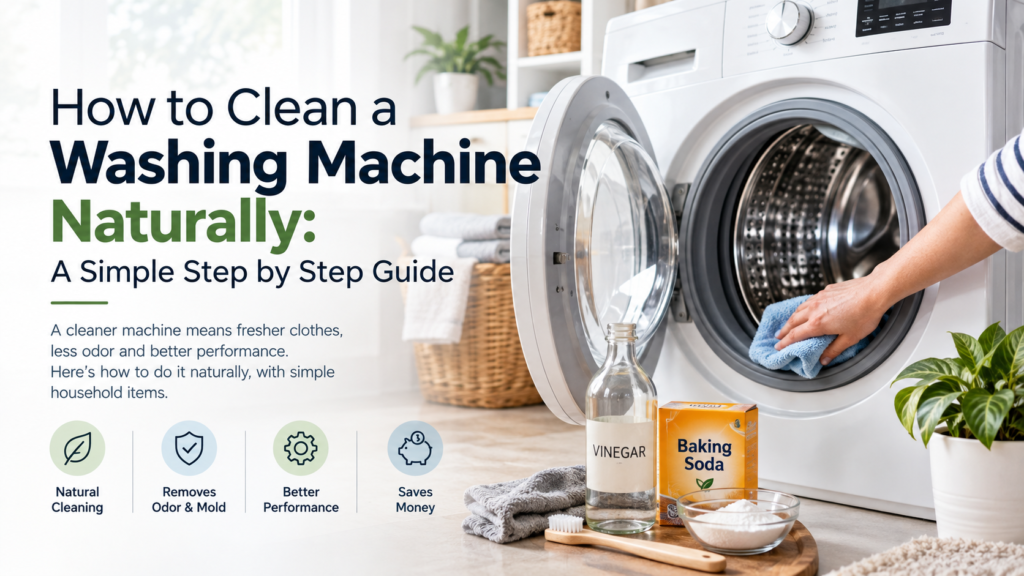
You do laundry to get things clean, so it is a surprise when clothes come out smelling stale. The cause is often the machine itself. Warm, damp conditions, leftover detergent and trapped lint create the perfect home for mold, mildew and bacteria. Learning how to clean a washing machine takes less than an hour a month and can save you money on repeat washes and early repairs.
This guide walks you through a safe, natural method using simple household items. You will also learn how vinegar compares with bleach and shop bought cleaners, how often to clean, and which daily habits keep smells away for good. It suits front loading and top loading machines in homes across the USA, UK, Australia and Europe.
How to Clean a Washing Machine: The Quick Answer
To clean a washing machine, wipe the door seal and detergent drawer, then run a hot empty cycle with white vinegar or a manufacturer approved cleaner. Follow with a second hot cycle using baking soda, clean the filter, and leave the door open to dry. Repeat monthly to prevent smells and mold.
Why Does a Washing Machine Smell?
A washing machine is wet, warm and closed most of the time. That combination is ideal for microbes. Three things usually cause the smell.
The first is detergent and fabric softener residue. Too much product does not rinse away fully. It builds up as a sticky film on the drum, hoses and seal, and that film feeds mold and mildew.
The second is trapped water. Front loading machines have a rubber door seal with deep folds that hold water, lint and hair. Top loaders can collect moisture under the agitator and around the drum.
The third is low temperature washing. Cooler cycles save energy, but they do not break down body oils and residue as well as hotter ones. Regular hot cleaning cycles help balance this.
What You Need Before You Start
You probably have most of these items at home already.
- White vinegar, about 2 cups (500 ml)
- Baking soda, about half a cup (120 g)
- A soft cloth or sponge and an old toothbrush
- Warm water and a few drops of dish soap
- A shallow tray and an old towel for the filter
- Rubber gloves
These items are inexpensive, and a bottle of vinegar and a box of baking soda will usually last for several cleans.
Safety First: Check Your Manual
Read your user manual before you begin. Some manufacturers recommend a specific cleaning cycle, often called Tub Clean, Drum Clean or Self Clean. Others advise against frequent use of vinegar because acid may wear rubber seals over time. If your manual says to avoid vinegar, use a cleaner approved by the manufacturer instead.
Always unplug the machine before you clean the filter or reach into hoses. Never mix vinegar with bleach or any other cleaning product. The mixture can release harmful gas. Use one product at a time and rinse well between them.
Step by Step: How to Clean a Washing Machine Naturally
Follow these six steps in order. The whole process takes about 15 minutes of work plus the time for two wash cycles.
Step 1: Empty the Machine and Check the Drum
Remove all clothes. Check the drum, the seal and the bottom of the door for socks, coins, hairpins and tissue. Small items can block the filter and pump, so it is better to catch them now.
Step 2: Wipe the Door Seal
The door seal is the most common place for black mold and bad smells. Pull back the rubber folds gently and look inside. Mix warm water with a few drops of dish soap and wipe all around the seal with a soft cloth. Use an old toothbrush for stubborn spots. Wipe the glass door and the inside rim too, then dry everything with a clean cloth.
If you see heavy black mold, wear gloves and repeat the wipe with a mix of equal parts water and white vinegar. Rinse with a damp cloth afterwards.
Step 3: Clean the Detergent Drawer
Pull the drawer out. Most drawers have a release tab, so check your manual if it will not slide free. Soak the drawer in warm soapy water for ten minutes, then scrub with a toothbrush. Wipe the empty slot inside the machine, because mold hides in the corners. Dry the drawer fully before you slide it back in.
Step 4: Clean the Filter
Most machines have a small filter near the bottom front corner, behind a panel. It collects lint, coins and debris. Unplug the machine, place a towel and a shallow tray under the panel, then turn the filter cap slowly. Some water will run out. Remove lint and hair, rinse the filter under the tap and screw it back in firmly. A blocked filter is a common reason for slow draining and unpleasant smells.
Top loading machines may have a lint trap in the drum or near the agitator. Check your manual to find it.
Step 5: Run a Hot Vinegar Cycle
With the drum empty, pour about 2 cups of white vinegar into the drum or the detergent compartment as your manual advises. Choose the hottest setting or the Tub Clean cycle. Let the cycle run to the end. The heat and vinegar help loosen residue from the drum and pipes.
Step 6: Run a Baking Soda Cycle
Sprinkle half a cup of baking soda into the drum and run a second hot cycle. Baking soda helps lift odors and leaves the drum smelling fresher. When the cycle ends, wipe the drum, seal and door with a dry cloth and leave the door open.
Vinegar vs Bleach vs Machine Cleaner Tablets
People often ask which cleaning product is best. Each option has strengths and limits.
White vinegar. It is cheap, widely available and gentle for regular use. It helps break down mineral and soap residue. Use it sparingly if your manual warns about rubber parts.
Bleach. Bleach can kill mold, but it can be harsh and has strong fumes. Use it only if your manufacturer permits it, follow the label exactly, and never combine it with vinegar or other cleaners. Good ventilation matters.
Machine cleaner tablets or powders. These are designed for washing machines and are often the simplest choice. They usually cost a few dollars or pounds per treatment and are approved for many brands. They are a good option if your manual recommends a specific product.
If you want to choose a product with safer ingredients, look for the EPA Safer Choice label on household cleaners. It helps shoppers find products that meet the United States Environmental Protection Agency standards for ingredient safety.
How Often Should You Clean a Washing Machine?
A simple schedule keeps everything under control.
- After most washes: Wipe the door seal and leave the door and drawer slightly open.
- Weekly: Wipe the seal and the glass, and check for trapped items.
- Monthly: Clean the detergent drawer and run a hot cleaning cycle.
- Every one to three months: Clean the filter. Check it more often if you wash pet bedding or towels.
Busy households may want a monthly deep clean. If you use your machine only a few times a week, every two to three months is often enough.
Front Loader vs Top Loader: Key Differences
Front loading machines are more efficient with water, but the door seal traps moisture. Pay extra attention to the seal and always leave the door open after use.
Top loading machines have no seal to worry about, though soap scum can form under the agitator and around the rim of the drum. Fill the drum with hot water, add vinegar, let it soak for an hour and then run a full cycle. Wipe the top rim and the lid with a soft cloth.
Daily Habits That Keep Smells Away
Cleaning is easier when you prevent problems. These habits make the biggest difference.
Use Less Detergent
More detergent does not mean cleaner clothes. Follow the label and use high efficiency detergent if your machine is marked for it. Too much soap leaves residue that feeds mold. If you notice suds or a slippery feel inside the drum, you are probably using too much.
Skip Extra Fabric Softener
Fabric softener can leave a coating inside the machine. If you use it, measure carefully and clean the dispenser regularly.
Remove Wet Laundry Quickly
Damp clothes left in the drum create odors in hours. Move laundry to the dryer or washing line as soon as the cycle ends.
Leave the Door Open
Let air circulate so the drum dries between washes. Close it only when you are running a cycle. If you have small children or pets, keep the door slightly ajar but supervise, or use the drying cycle if your machine has one.
Run a Hot Wash Now and Then
Wash towels and bedding at a hotter temperature if the care label allows. This helps remove oils and residue from both the clothes and the machine. For guidance on efficient use, see the ENERGY STAR clothes washer page.
What If the Smell Does Not Go Away?
If your machine still smells after a full clean, check these common causes.
- The drain hose. A kinked or blocked hose can leave water standing in the machine.
- The filter. Clean it again, because some debris sits deep inside.
- The pump or trap. A technician can check this if the machine drains slowly.
- Your home drain. Smells from a household drain can mimic a dirty washer. Run water down nearby drains to see if the smell changes.
If you have tried all of the above, it may be time to call a qualified appliance repair technician.
Smart Home Habits Worth Trying
A fresh, tidy home often starts with small routines. If you enjoy practical household ideas, browse our Home & Aesthetic section for more decor and cleaning inspiration. You can find more step by step guides in our Cleaning category and clever shortcuts in Home Hacks. If you like finding a second use for everyday items, read why you should not pour out boiled egg water in our guide to boiled egg water uses.
Frequently Asked Questions About Cleaning a Washing Machine
How often should I clean my washing machine?
Most households should run a hot cleaning cycle once a month and wipe the door seal weekly. If you use the machine rarely, every two to three months is usually enough. Clean the filter every one to three months.
Can I use vinegar and bleach together?
No. Never mix vinegar and bleach. The combination can release dangerous fumes. Use only one product at a time, and rinse the machine with a plain hot cycle between products if you change method.
Is vinegar safe for front loading machines?
Occasional use is common, but some manufacturers warn that frequent use may wear rubber seals. Check your user manual first. If vinegar is not recommended, use a cleaner approved by the maker of your machine.
Why does my washing machine smell after cleaning?
The cause may be a blocked filter, a kinked drain hose, hidden mold in the drawer slot or trapped water in the seal. Repeat the cleaning steps, dry the machine well and check the drain hose. If the smell stays, speak to an appliance technician.
Should I leave the washing machine door open?
Yes. Leaving the door and detergent drawer slightly open lets air in and helps the drum dry. This is one of the easiest ways to prevent mold and mildew.
Final Thoughts
Knowing how to clean a washing machine is a simple skill that pays off every week. Wipe the seal, clean the drawer and filter, run a hot cycle each month and leave the door open to dry. Use less detergent, remove wet laundry quickly and check your manual for product advice. With these steps, your machine stays fresh and your clothes come out smelling clean.