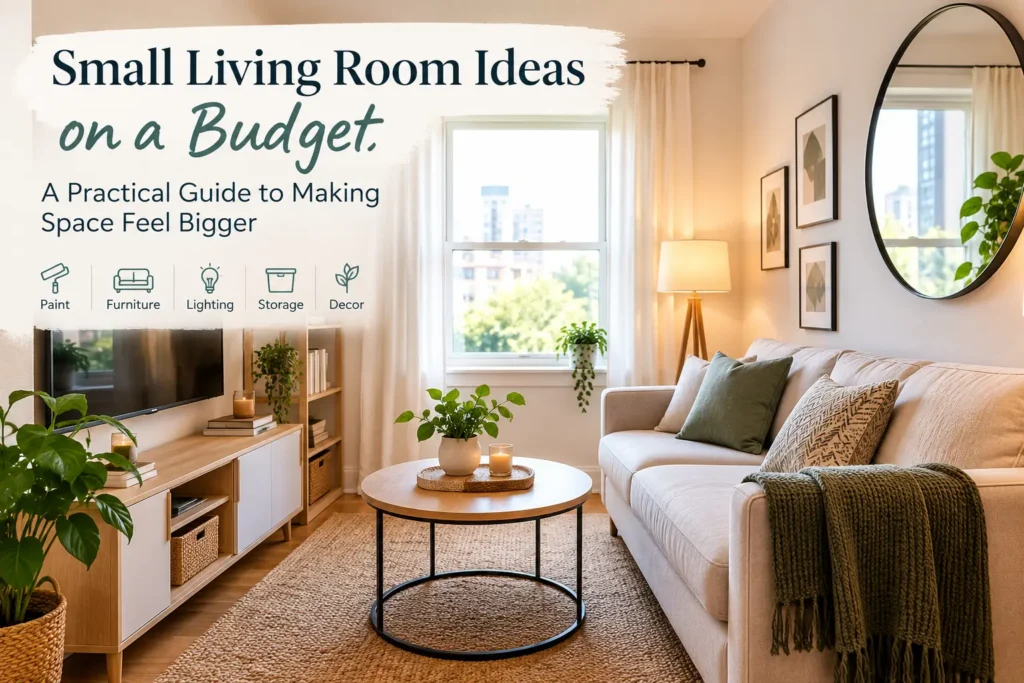
A small living room does not have to feel cramped. If you are searching for small living room ideas on a budget, the good news is that the biggest improvements usually come from clever choices, not expensive purchases. Light, layout, storage and a little patience can make a compact room feel calm, open and welcoming.
Whether you live in a city flat in London, an apartment in New York, a terrace in Melbourne or a compact home in Berlin, the same design principles apply. This guide walks you through a practical plan. You will learn how to measure and declutter, arrange furniture, choose paint, use lighting and mirrors, add storage and decorate without clutter. You will also find a simple weekend makeover plan and honest advice on where to spend and where to save.
The Short Answer: Small Living Room Ideas That Work
The best small living room ideas on a budget are to use light, warm paint, choose furniture with slim legs and built in storage, hang mirrors opposite a window, layer lamps instead of relying on one ceiling light, and keep floors and surfaces clear. Rearranging what you already own often makes the biggest difference at no cost.
The sections below explain each idea step by step, with simple examples you can try in a weekend.
Start With a Plan: Measure, Declutter and Set a Budget
Before you buy anything, spend an hour on preparation. It is the cheapest step and often the most important.
Measure your space
Write down the width and length of the room, the position of doors and windows, and the size of your main furniture. A simple sketch on paper is enough. Measuring stops expensive mistakes, such as a sofa that blocks a door or a rug that is too small. Take your measurements with you when you shop, whether you are in a store or browsing online.
Declutter first
In a small room every item competes for space. Go through your shelves, tables and floor, and sort items into keep, donate, sell and recycle. Be honest about what you use and enjoy. Selling unused items online can even pay for part of your makeover. A useful guide is to leave about a third of every surface empty, because open space gives the eye somewhere to rest.
Set a realistic budget
Decide on a total amount before you shop. As an example, a budget of around $200 (roughly £160 or 300 Australian dollars) can cover paint, a couple of lamps with warm bulbs, a mirror and some storage baskets. Spend a little more on items you use every day, such as a comfortable sofa, and save on decorative extras. Prices vary by country and store, so treat these amounts as a rough guide.
Small Living Room Ideas for Layout and Furniture
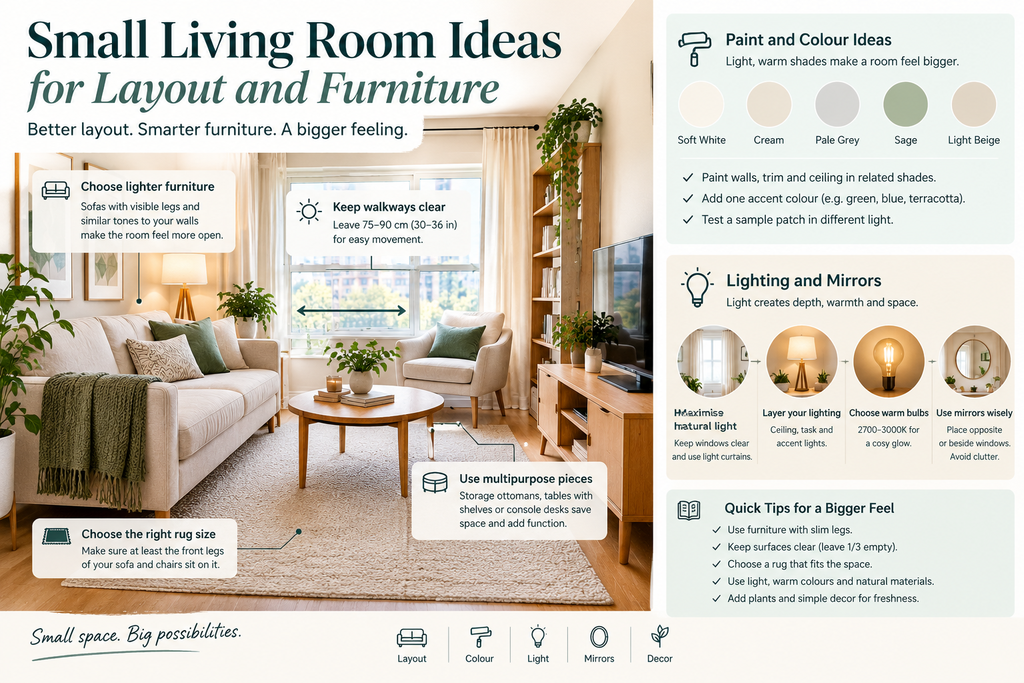
How you arrange furniture affects how big a room feels. Often, rearranging what you already own is the best free upgrade.
Choose furniture with a lighter look
Sofas and chairs with visible legs let you see the floor underneath, which makes a room feel more open. Pieces in a similar tone to your walls also blend in, so they take up less visual space. Look for a two seater sofa, a slim armchair and a nesting set of tables that can be pulled out when guests arrive.
Pick multipurpose pieces
An ottoman with hidden storage, a coffee table with a shelf, or a console table that doubles as a desk can replace two or three separate items. Second hand shops, online marketplaces and community groups are great places to find solid furniture at a lower price. Check that any used piece is clean, stable and free from damage before you buy.
Keep clear walkways
Leave a path of roughly 75 to 90 centimetres (30 to 36 inches) where people walk through the room. If you must squeeze things in, make sure the main route from the door to the sofa stays open. Avoid blocking windows with tall furniture, since natural light is your best friend in a small room.
Think about your technology
Placing a large bookcase or a thick storage unit in front of your router can weaken your signal. Before you decide where to put things, take a look at our article on WiFi troubles and the strange household things that block signals. It will help you place your router and devices sensibly.
Use a rug of the right size
A rug that is too small makes a room feel chopped up. Choose one large enough that at least the front legs of your sofa and chairs sit on it. A pale or lightly patterned rug adds warmth without making the floor feel heavy.
Paint and Colour Ideas That Open Up a Room
Colour has a strong effect on how a room feels. Light, warm shades such as soft white, cream, pale grey, sage or light beige reflect more light and help walls seem further away. Dark colours can work, but they need good lighting and careful styling, so beginners usually do better with lighter shades.
Paint walls and trim in related shades
Painting the walls, skirting boards and even the ceiling in related shades removes sharp lines and makes the room feel taller and calmer. A tin of quality paint often costs less than a new piece of furniture and changes the whole mood of a room.
Add one accent colour
Choose one accent, such as deep green, dusty blue or terracotta, and repeat it in two or three small items like cushions, a vase and a print. Repetition feels intentional and tidy. For more on how colours and surroundings shape the way we feel, explore our Style Psychology section.
Test before you commit
Paint a sample patch on two different walls and check it in morning, afternoon and evening light. Colours look different throughout the day, and a quick test saves both money and regret. When you paint, open the windows, choose low odour products where possible and follow the instructions on the label.
Lighting and Mirrors: The Secret to a Bigger Feeling
Light is the secret ingredient in almost every successful small room.
Make the most of natural light
Keep windows clear and clean. Hang curtains high above the window frame and wide on each side, so that they open fully and do not cover the glass. Sheer or light fabrics let daylight in while still giving some privacy.
Layer your lighting
Relying on one bright ceiling light can make a room look flat and harsh. Instead, combine three types of light: a general light such as a ceiling fitting, a task light such as a reading lamp, and a soft accent light such as a small table lamp or string lights. Place lamps at different heights to create depth.
Choose warm bulbs
Look at the colour temperature on the packaging. Bulbs around 2700 to 3000 Kelvin give a warm, cosy glow that suits living rooms. LED bulbs use far less energy than older types and last much longer. The US Department of Energy has a helpful guide to LED lighting, and the Energy Saving Trust offers energy saving advice for UK homes. If you like the idea of controlling your lights from your phone, our Technology section covers smart home tips.
Use mirrors wisely
A large mirror placed opposite or beside a window reflects daylight and makes the room feel deeper. A leaning floor mirror is often cheaper than a wall mounted one and needs no drilling. Avoid placing a mirror where it reflects clutter. Other reflective touches, such as glass vases, metallic frames and glossy ceramics, add sparkle without taking up much room.
Smart Storage and Home Organisation on a Budget
Small rooms get untidy fast, so smart storage is essential. Good home organisation also makes the room easier to clean and more relaxing to sit in. You can find more ideas in our Home & Aesthetic section.
Go vertical
Walls are free space. Tall bookcases, floating shelves and wall hooks use height instead of floor area. Keep your heaviest items on the lower shelves and secure tall furniture to the wall, particularly if you have children or pets.
Hide the everyday mess
Baskets, lidded boxes and a storage bench keep remote controls, blankets, toys and chargers out of sight. Choose containers in matching materials such as woven baskets or fabric boxes, so they look like decor and not clutter.
Use the dead space
Slide flat boxes under the sofa, hang a rail behind the door, or add a narrow shelf above a doorway. Use cable ties or clips to keep wires neat, because messy cables make a room look busy.
Keep one simple routine
A ten minute daily reset works wonders. Put things back, fold blankets and clear surfaces. For a simple clean, many people use natural options such as a mix of white vinegar and water on glass and a paste of baking soda for small stains. Test on a small hidden area first, and avoid vinegar on natural stone, which it can damage. Always follow the care instructions for your furniture and floors.
Decorate Without Clutter: Textiles, Plants and Art
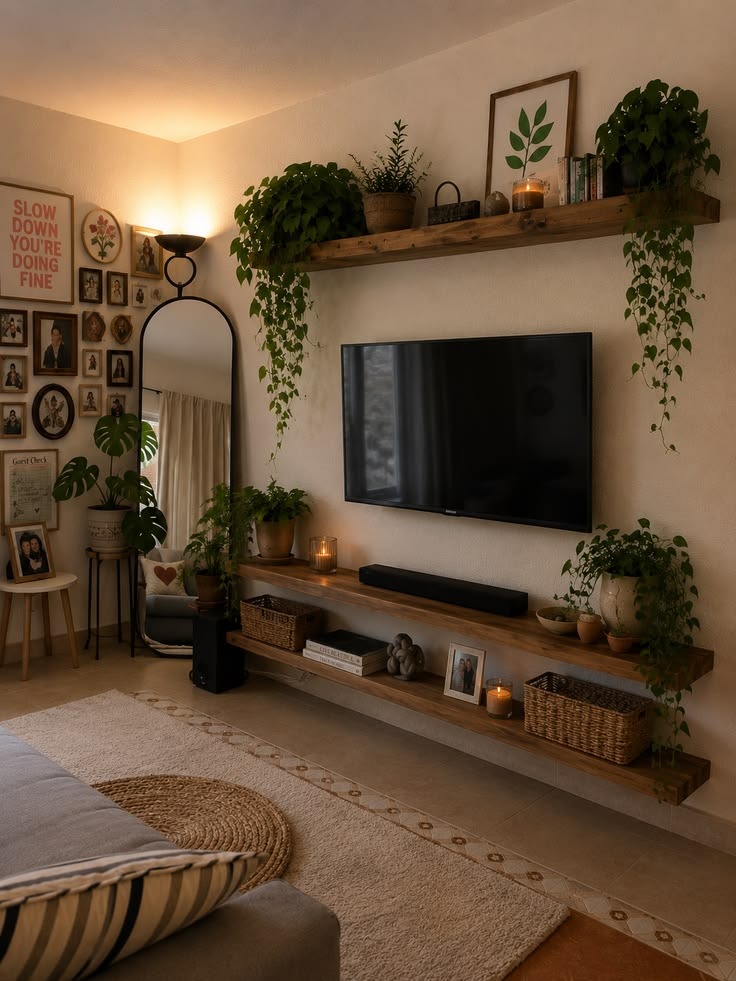
Once the basics are in place, add personality in small, careful doses.
Choose soft textiles
Cushions, throws and curtains add colour and softness. Stick to two or three fabrics and keep patterns similar in scale. Natural fabrics such as cotton and linen feel relaxed and age well.
Bring in plants
Plants bring life to a small room. Easy options include pothos, snake plant and spider plant, which cope with a range of light levels. If you have cats or dogs, check that your chosen plants are safe for pets.
Hang art with confidence
A single large piece of art often looks better than many tiny ones. If you like a gallery wall, keep the frames in a similar colour and leave even gaps between them. Many museums offer free downloads of public domain artworks, which you can print at home or at a local print shop for a low cost.
Edit as you go
Try the rule of three. Group objects in threes with different heights, then stop. Rotating a few items with the seasons keeps the room feeling fresh without buying more.
Where to Spend and Where to Save
A small budget goes furthest when you know what matters most.
Spend a little more on:
- A comfortable sofa or armchair, because you use it every day
- Quality paint, which covers better and lasts longer
- A good reading lamp and warm LED bulbs
- A rug that is large enough for the room
Save money on:
- Cushions, throws and picture frames, which are easy to find second hand or on sale
- Storage baskets and boxes
- Mirrors, which are often available at low cost in thrift stores
- Plants, which you can grow from cuttings shared by friends
A Simple Weekend Makeover Plan
You can make a real difference in two days. Here is an example schedule.
- Saturday morning: Measure the room, declutter and sort items into keep, donate, sell and recycle.
- Saturday afternoon: Clean the room, move furniture into your new layout and set up the rug.
- Saturday evening: Hang curtains high and wide, and swap harsh bulbs for warm ones.
- Sunday morning: Paint one wall or a feature piece of furniture, following the safety advice on the can.
- Sunday afternoon: Add the mirror, baskets, plants and cushions.
- Sunday evening: Step back, remove anything that feels like too much and enjoy the result.
Common Mistakes to Avoid
- Buying before measuring. Always check dimensions for the room, the doorway and the stairs.
- Filling every corner. Empty space is part of the design.
- Using one harsh ceiling light. Layered lamps feel warmer and more flattering.
- Choosing furniture that is too large. Scale matters more than style in a small room.
- Skipping the clear out. Even the best decor looks messy if there is too much stuff.
Frequently Asked Questions About Small Living Rooms
How can I make a small living room look bigger on a budget?
Declutter first, then use light paint, a large mirror opposite a window, furniture with visible legs and layered lighting. Keep walkways clear and hang curtains high. These steps cost little and change how spacious the room feels.
What colour is best for a small living room?
Light, warm shades such as soft white, cream, pale grey or sage usually work best because they reflect light. A single deeper accent colour in cushions or art adds interest without shrinking the space.
Should I push all my furniture against the walls?
Not always. In very small rooms, placing furniture against walls can free up the middle, but pulling a sofa a few centimetres from the wall and adding a small side table can make the room feel cosier. Test both layouts and choose the one that feels easiest to move around.
How much does it cost to refresh a small living room?
It depends on your country and what you already own. Many people complete a meaningful refresh for around $150 to $300 (about £120 to £240) by combining paint, lamps, baskets and second hand finds. Rearranging furniture and decluttering cost nothing.
Are mirrors really worth it in a small room?
Yes. A well placed mirror reflects natural and lamp light, which adds depth and brightness. Place it opposite or beside a window for the best effect, and avoid reflecting clutter.
Final Thoughts
The best small living room ideas are simple, affordable and easy to repeat. Measure carefully, clear the clutter, choose light colours, layer your lighting, add smart storage and decorate with a light touch. You do not need a large budget or a large room to create a space that feels beautiful and relaxing. Start with one small change this weekend and build from there.