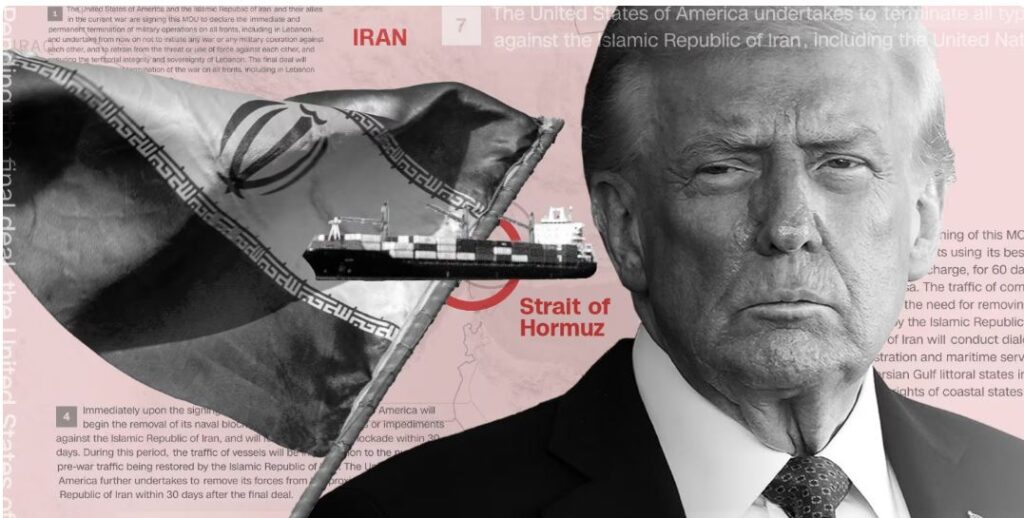
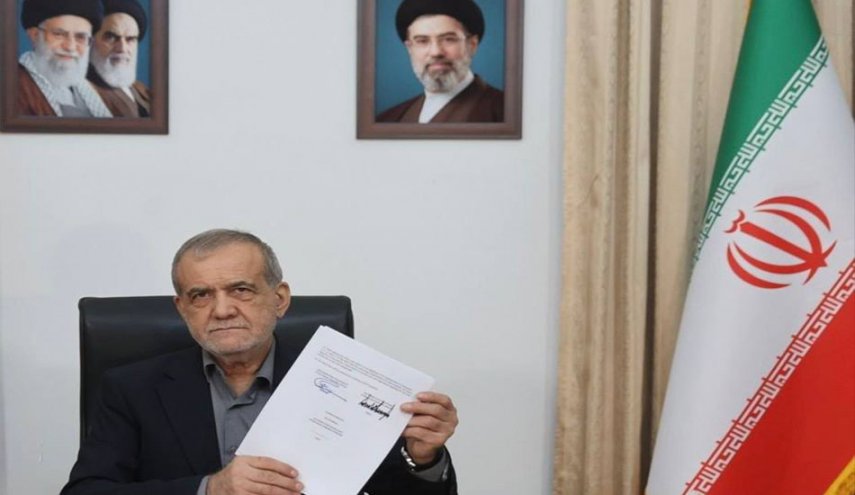
A newly announced US–Iran memorandum of understanding (MOU) outlines a 14‑point framework to expand a ceasefire and reopen the Strait of Hormuz, but leaves key details especially on Iran’s nuclear program and exact financial terms for later negotiations. The short, 800‑word draft promises major concessions for Iran, including the lifting of many sanctions, permission to resume oil exports, access to frozen assets and a proposed USD 300 billion reconstruction and development fund. In return, Iran agrees to halt military operations and guarantee safe commercial passage through the Strait for an initial 60 days while final terms are negotiated.
Key points at a glance
- Immediate ceasefire and non‑aggression: Both sides commit to an immediate and permanent end to military operations “on all fronts,” with specific language extending protections to Lebanon’s sovereignty. The MOU references each party’s “allies” but does not explicitly name Israel or Hezbollah, complicating regional buy‑in.
- Respect for sovereignty: The US signals it will refrain from intervening in Iran’s internal affairs a shift away from earlier talk of promoting regime change.
- 60‑day timeline: The MOU sets a target of 60 days to negotiate a final deal, extendable by mutual consent. That clock could be affected by Iranian national events, including religious holidays and the official mourning period.
- Strait of Hormuz access: Iran will allow free passage of commercial vessels for 60 days and begin demining and other measures within 30 days. Future administration of the strait will be negotiated with Oman and other Gulf states under international law, raising the possibility of long‑term transit fees.
- Sanctions relief and oil sales: The US pledges to lift sanctions in stages and to issue Treasury waivers so Iran can export crude and access related services while talks continue. Unfreezing Iranian funds is also promised, with Iranian estimates of assets ranging widely.
- Big finance package: The MOU mentions a USD 300 billion plan for reconstruction and development to be finalized in the final deal a massive infusion that would exceed Iran’s currently reported frozen assets and has not yet been fully explained.
- Nuclear commitments left vague: Iran reaffirms it will not pursue nuclear weapons, and both sides agree to negotiate stockpile disposition and enrichment limits. However, the MOU does not provide the detailed, enforceable nuclear constraints found in previous accords like the JCPOA.
- Verification and enforcement: The parties agree to set up an executive mechanism to monitor compliance, and the final agreement will be endorsed by a binding UN Security Council resolution.
Why the deal is significant and risky
- Economic lift for Iran: Allowing Iran to sell oil and access frozen funds could quickly restore government revenues and relieve economic pressure, but critics warn it could also free resources that might be diverted to regional proxies.
- Regional politics matter: The MOU’s success depends on cooperation from regional players notably Israel and Gulf states whose security concerns and political stakes could complicate or block implementation.
- Nuclear detail deferred: The lack of concrete, verifiable nuclear limits in the MOU means a final deal must still resolve one of the most sensitive issues for both the US and its allies.
- Big sums, few specifics: The proposed USD 300 billion financing and the scale of asset unfreezing are headline numbers without clear sources, timelines or safeguards yet defined.
Next steps and timelines
- Implementation steps in the MOU (naval withdrawal, Strait reopening, oil waivers and asset access) are to begin immediately and must be largely in place within 30–60 days.
- Negotiators have 60 days, from the reported signing date, to hammer out a final, legally binding deal that addresses nuclear safeguards, sanctions timetables, verification mechanisms and the structure of any reconstruction financing.
- The final deal would need UN Security Council endorsement, making consensus among permanent members essential.
Bottom line
The MOU represents a major diplomatic opening between the US and Iran with potentially far‑reaching economic and security consequences. It promises rapid relief for Iran’s economy and a phased return to normal maritime traffic through the Strait of Hormuz, but leaves the most contentious technical and verification issues especially on nuclear activity and the precise mechanics of sanctions relief and financing to the next round of talks. Its success will hinge on transparent verification measures, regional buy‑in and detailed implementation plans that address the deal’s biggest unknowns.