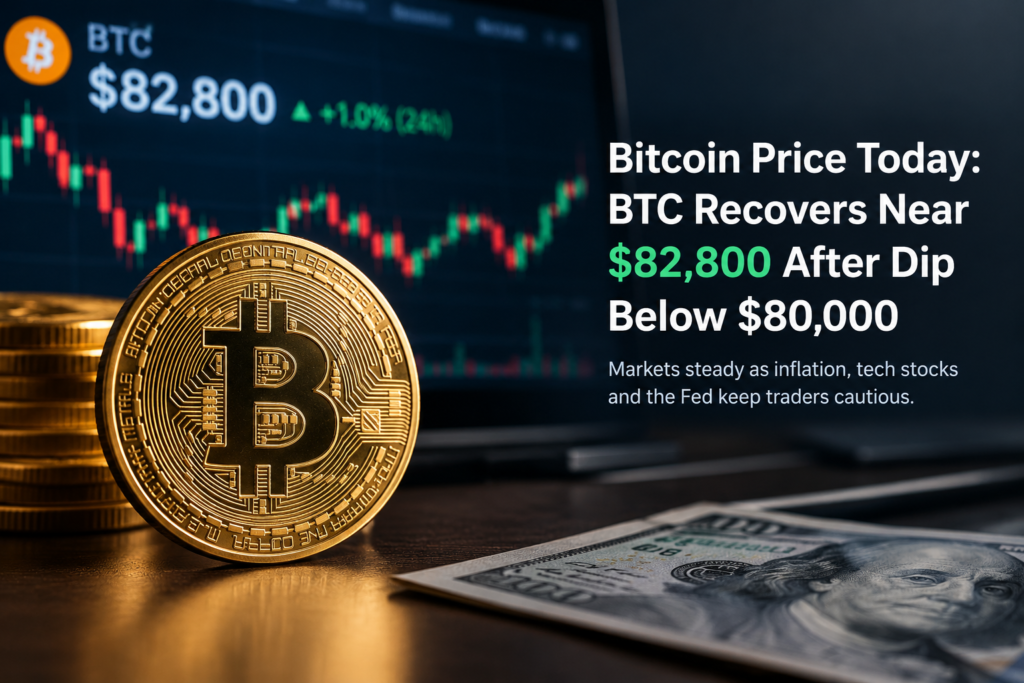
Bitcoin price today is hovering near $82,800 after a choppy stretch that took it below $80,000 last week. As of Monday, October 19, 2026, the largest cryptocurrency has pulled back from its lows, but traders remain cautious. Hot inflation data, shaky technology stocks and a Federal Reserve meeting on the horizon are all shaping the mood.
This report explains what moved the market, how inflation and interest rates connect to crypto, and which events could matter most over the next few days. All figures come from named sources, including crypto.news, CCN and Reuters, and we have written the summary in our own words.
Bitcoin Price Today: The Quick Answer
As of October 19, 2026, Bitcoin trades near $82,800, up about 1% in 24 hours and roughly 1% lower over seven days, according to crypto.news and CoinGecko data. It fell below $80,000 last week after strong US inflation reports raised fears of more interest rate rises. Traders now watch earnings, jobs data and the Fed.
Crypto Market Snapshot on October 19
Here is where the main coins were trading on Monday, based on prices reported by crypto.news.
- Bitcoin (BTC): about $82,700 to $82,800, with a weekly range of roughly $79,806 to $84,231.
- Ethereum (ETH): about $2,420 to $2,430, up less than 1% to 3% on the day depending on the time of the quote.
- XRP: about $1.31.
- Solana (SOL): about $105.
CCN, citing Reuters, reported that Bitcoin rose about 1.9% to around $82,479 and Ethereum gained about 3% to $2,420 during the Monday rebound. Small differences between sources are normal because prices change by the second and each data provider uses a different time stamp.
What Happened Over the Weekend?
Crypto traders entered Monday nervous. CCN reported that Bitcoin, Ethereum and perpetual futures tied to artificial intelligence and chip stocks all suffered sudden price swings over the weekend. One estimate put AI related liquidations at close to $34 million. A liquidation happens when an exchange closes a leveraged trade because the trader no longer has enough money to cover losses.
The date added to the unease. October 19 is the anniversary of the 1987 stock market crash, known as Black Monday, and social media chatter about a repeat spread quickly. In practice, markets steadied on Monday. Bitcoin and Ethereum both recovered some ground, and the early panic faded.
It is a useful reminder that crypto markets trade around the clock. Price moves can happen on a Saturday night when traditional stock markets are closed, and that can make weekend swings sharper.
Why Inflation Data Is Driving Bitcoin
The biggest driver this month has been inflation. According to figures cited by crypto.news, US consumer prices rose 0.6% in September from August, and annual inflation reached 3.7%. Producer prices, which measure what businesses pay at the wholesale level, rose 1.3% in September and 6.3% from a year earlier, based on Bureau of Labor Statistics data. Energy costs were a major factor, climbing 10.8% in the month.
Why Does Inflation Affect Crypto?
When inflation runs hot, central banks may keep interest rates high or raise them again. Higher rates make safer assets such as government bonds and savings accounts more attractive. They can also make borrowing more expensive. Investors then tend to reduce exposure to volatile assets, and Bitcoin often falls in those moments.
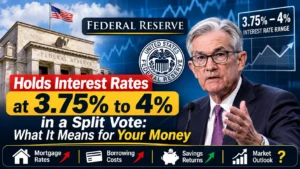
The Federal Reserve raised its target range by a quarter percentage point in September, to between 3.75% and 4%, as reported by crypto.news. After the producer price report, Bitcoin slipped toward $81,500 as investors reconsidered the chance of further rate rises.
Why Is the Fed Quiet This Week?
The Fed is in its communications blackout period, which runs from October 17 to October 29. Officials are not giving public comments on policy during this time. The next policy meeting is scheduled for October 27 and 28. Until then, markets are left to interpret economic data without fresh guidance.
Stocks and AI Worries Add Pressure
Crypto has not moved alone. The Nasdaq Composite lost about 4.5% last week, and chip stocks fell by even more, according to crypto.news. The selling followed questions about whether huge spending on AI data centres and chips will bring enough profit.
Bitcoin does not always follow technology shares, but in stressful weeks the two can move together because investors sell risky assets at the same time. That link is one reason traders are watching technology earnings so closely this week.
Markets are also dealing with higher oil prices, which feed into inflation fears. Together, these factors have kept investors on edge.
ETF Flows: Are Investors Pulling Money Out?
Exchange traded funds that hold Bitcoin and Ether have seen outflows in recent days. Blockchain Reporter said US spot Bitcoin ETFs lost about $261.4 million after the hot producer price report, and crypto.news noted that Ethereum fund outflows exceeded Bitcoin outflows last week. FXStreet described the Monday recovery as happening despite continued ETF outflows.
Outflows show that some investors are taking money out of these funds. They are one signal among many and do not predict future prices on their own. A single week of flows can reverse quickly.
Leverage and Liquidations Explained
Leverage means trading with borrowed money to magnify a position. It can increase gains, but it can also magnify losses. When prices fall quickly, exchanges automatically close positions that no longer meet safety rules. These forced sales can push prices lower, which triggers more liquidations.
A crypto.news analysis on October 14 cited $811 million in liquidations during an earlier decline, with open interest still elevated. Open interest is the total value of open futures contracts. High open interest means many traders have bets in play, which can lead to larger moves if data surprises the market.
For everyday readers, the lesson is simple. Leveraged trading carries a high risk of losing more money than expected, and sudden swings are common.
What to Watch This Week
Crypto.news has outlined a busy calendar from October 19 to 23. Here is a quick guide, day by day.
Tuesday, October 20
September pending home sales data arrives, and SpaceX is scheduled to report earnings. Both help show how consumers and large companies are coping with high borrowing costs.
Wednesday, October 21
Meta and Tesla report quarterly results, along with IBM. Investors will focus on AI spending at Meta and on profits and spending plans at Tesla. The US Energy Information Administration also publishes its weekly oil inventory report, which can affect energy prices and inflation expectations.
Thursday, October 22
Weekly jobless claims show how many people filed new unemployment claims. A higher number may suggest a cooling job market, while a lower number suggests employers are holding on to staff. One week of data rarely changes the bigger picture, but it can move markets.
Friday, October 23
S&P Global releases flash purchasing managers’ index readings for manufacturing and services. A reading above 50 generally signals expansion, and below 50 signals contraction. The University of Michigan also publishes its final October consumer sentiment survey. The preliminary reading fell to 46.3 from 48.1 in September, and consumers expected inflation of 4.7% over the next year.
How Bitcoin Has Traded So Far in October
Bitcoin has had a mixed month. Daily data from BGeometrics shows it closed near $86,550 on October 4, then slid to about $81,900 by October 12. CryptoTicker noted earlier in the month that Bitcoin was range bound between about $83,500 and $86,600, and that October has historically been a mixed month for the coin.
The latest dip below $80,000 therefore broke the lower edge of that range. Traders will watch whether Bitcoin can stay above $80,000 and whether it can move back toward the mid $80,000 area. Nobody can know in advance, and technical levels are only guides.
What Could Happen Next?
No one can reliably predict short term price moves. Here are the main possibilities analysts discuss, described neutrally.
- Calmer data and solid earnings could ease pressure on risk assets and help Bitcoin hold its recent bounce.
- Hot data or weak earnings could renew fears of rate rises and bring another round of selling.
- A mixed picture could leave Bitcoin moving sideways while traders wait for the Fed meeting.
Beyond this week, some analysts point to Ethereum’s planned Glamsterdam upgrade as a future event to watch, though dates and effects can change.
What This Means for Everyday Readers
If you follow crypto for news rather than trading, the main takeaway is that Bitcoin is currently reacting to the same things as other markets: inflation, interest rates and technology stocks. It is not moving in a vacuum.
If you do own crypto, remember that prices can change quickly. Avoid borrowing to invest, only use money you can afford to lose and keep your accounts secure with strong passwords and two step verification. You can find security guidance in our Technology section.
For more market coverage, visit our Crypto News page. For wider headlines, see Latest News, and for analysis of how markets and companies are coping, explore our Business category.
Frequently Asked Questions About Bitcoin Price Today
What is the Bitcoin price today?
As of October 19, 2026, Bitcoin trades near $82,800 according to crypto.news and CoinGecko data. It briefly fell below $80,000 last week. Prices change constantly, so check a live price tracker before making any decision.
Why did Bitcoin fall below $80,000?
Analysts linked the drop to hotter than expected US inflation data, which raised fears of more Federal Reserve rate rises, along with weakness in technology stocks and outflows from crypto funds. Leveraged trades being closed automatically also added to the selling.
When is the next Federal Reserve meeting?
The Federal Reserve meets on October 27 and 28, 2026. Officials are in a communications blackout from October 17 to 29, so they are not commenting publicly on policy during that time.
Does inflation affect Bitcoin?
Often, yes. Higher inflation can lead to higher interest rates, which make safer assets more attractive and can reduce demand for volatile assets like Bitcoin. The link is not perfect and other factors also matter.
Is Bitcoin a safe investment?
Bitcoin is a volatile asset and its price can rise or fall sharply in a short time. There are no guaranteed returns. Consider your own situation and speak to a qualified financial adviser before investing.
Sources
This article was written in our own words using reporting and data from crypto.news (October 19, 2026), CCN citing Reuters (October 19, 2026), FXStreet (October 19, 2026), Blockchain Reporter (October 18, 2026), BGeometrics daily reports (October 2026) and CryptoTicker (October 2026). Read the original crypto.news week ahead report and the CCN market report for more detail.
This article is for information only and is not financial advice.