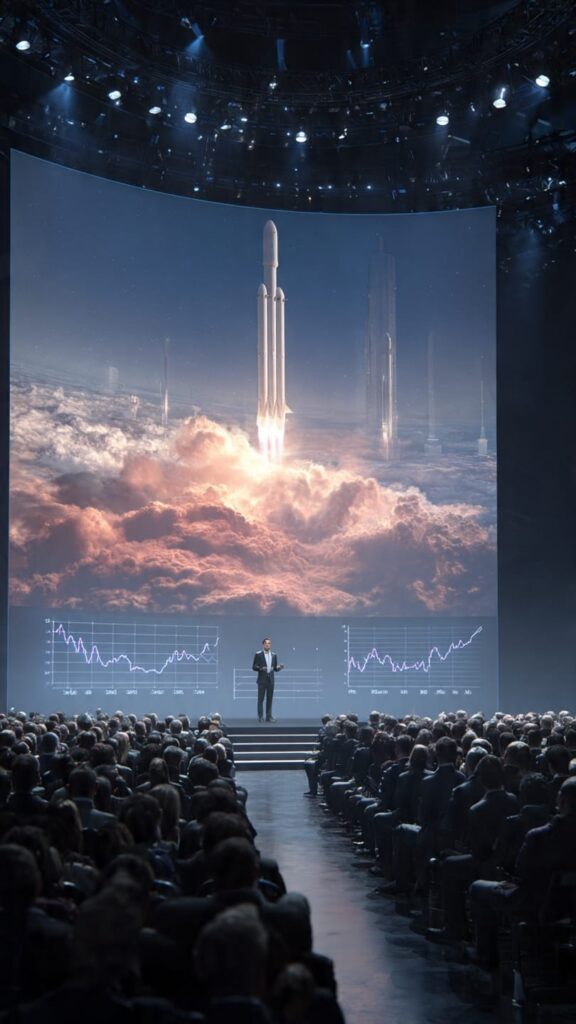
The summer of 2026 will be remembered as the year that science fiction became a commercial reality. For many years, SpaceX was perceived by the general public as a rocket manufacturer with a satellite internet side business. However, Elon Musk has fundamentally rewritten the rules for the telecoms, artificial intelligence, and aerospace sectors in a succession of astounding, quick decisions
Musk has revealed a great master plan that goes far beyond just placing boots on Mars by carrying out a historic, record-breaking Initial Public Offering (IPO) and formally merging his artificial intelligence startup, xAI, into a newly formed organization named SpaceXAI. He is constructing an AI-powered super-network in orbit that has the potential to drastically change how people handle data.
Get ready if you thought it was a spectacle when reusable rockets landed on drone ships. Everything is set to change due to the corporate transformation taking place far above our heads.
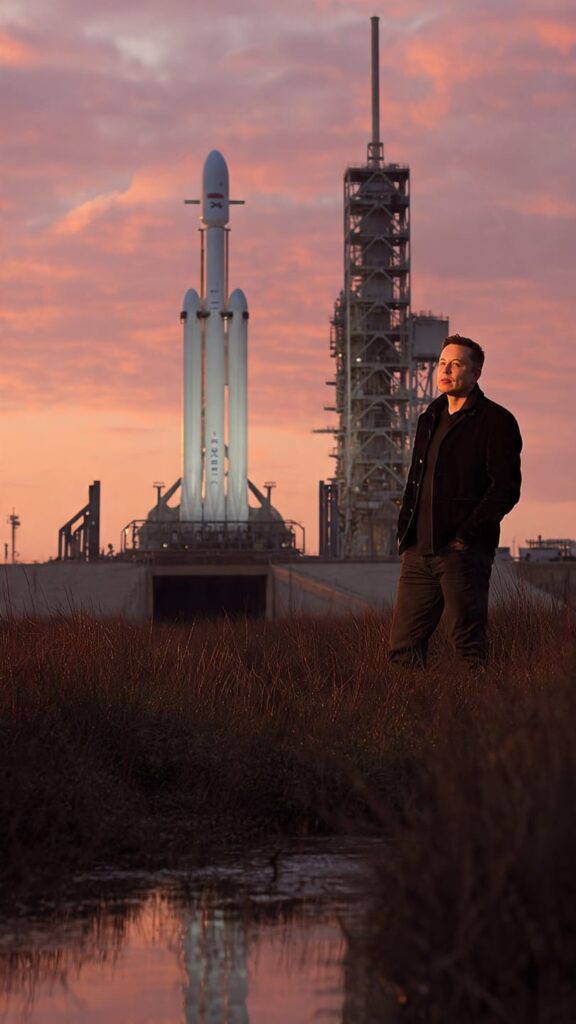
IMAGE AI GENERATED
The Titan’s Birth: What is SpaceXAI?
Wall Street and IT analysts watched for months as a huge jigsaw gradually came together. When Musk announced on X that xAI will no longer be a stand-alone company, the loop was formally closed. Rather, it has been completely integrated into SpaceX.
This isn’t a commercial cross-promotion or a casual alliance. A complete absorption is shown by the new SpaceXAI logo, which elegantly incorporates the recognizable geometric “xAI” branding straight into the classic SpaceX identity. xAI is now a key component of the massive aerospace company, just like Starlink is a product division of SpaceX.
The figures supporting this consolidation are astounding. The process started with the biggest private merger in human history, which valued the combined company at an astounding $1.25 trillion ($1 trillion for SpaceX and $250 billion for xAI). Musk was able to address two major issues for each of his businesses by working together:
- While developing its flagship Grok AI models, xAI was working as a highly inventive but capital-intensive machine, spending billions on computers and infrastructure.
- SpaceX required a hyper-growth technology story to command the exceptional value it sought for its public debut, even while it was producing amazing cash flow—bringing in billions of dollars through its dominance in commercial launches and its Starlink network.
By combining the two, Musk established an apex predator of contemporary industry: a business that develops the underlying AI software, produces the rockets, launches the satellites, and controls the social data pipeline.
The Master Plan: Why Build AI Data Centers in Space?
Everyone’s first thought was straightforward: Why combine a rocket firm with a startup focused on artificial intelligence? The Federal Communications Commission (FCC) received a very ambitious regulatory filing that contains the solution.
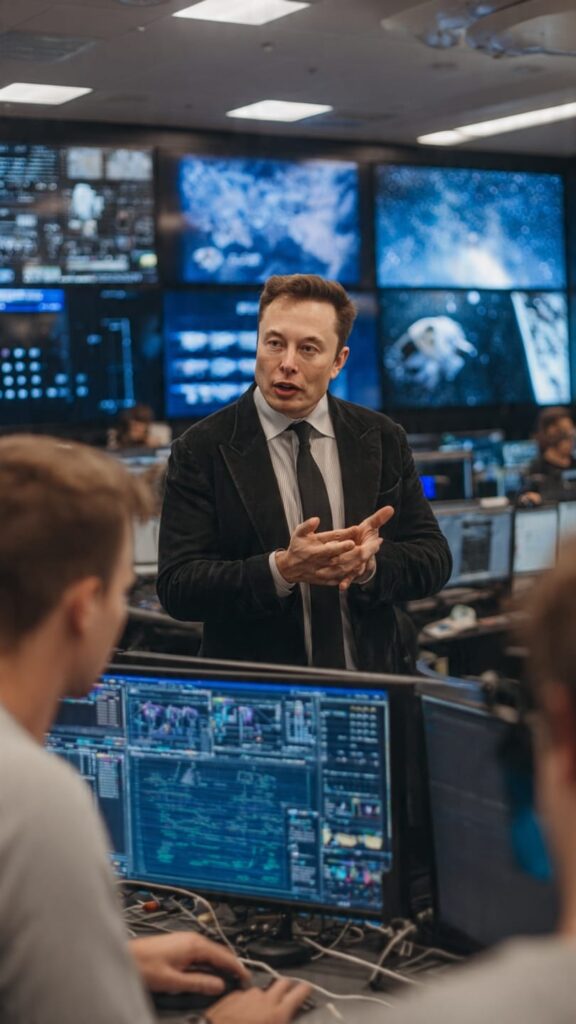
IMAGE AI GENERATED
Musk’s main argument is that the advancement of artificial intelligence on Earth is quickly coming to a standstill. It’s a dearth of power and cooling, not a lack of human inventiveness. Large, gigawatt-scale supercomputers are needed to train next-generation frontier models. In order to prevent tens of thousands of GPUs from melting down, these data centers on Earth use enormous quantities of electricity, put a burden on municipal grids, and need millions of gallons of water or intricate cooling systems.
Musk’s solution? Take the compute to space.
Up to a million specialized satellites intended to serve as AI compute nodes in Low Earth Orbit (LEO) are planned to be launched by SpaceXAI. The network can take use of a number of special cosmic benefits by transferring data processing into space:
- Infinite Solar Energy: If properly positioned in high-frequency sun-synchronous orbits, these satellite data centers can capture pure, unadulterated solar energy, free from air interference and nocturnal cycles.
- The Ultimate Cold Sink: Massive computing clusters may be naturally cooled by the cold ambient temperature of space, which significantly lowers the conventional overhead expenses related to managing data centers on Earth.
- Bypassing Local Regulators: SpaceXAI avoids the environmental restrictions and terrestrial grid limitations that have slowed down large-scale tech infrastructure projects on Earth by moving a significant amount of the computational workload outside the planet.
xAI delivers its whole software stack, including the Grok LLM and the real-time data streaming from the X platform, to power this cosmic brain. Physically, the company connects to the Colossus supercomputer infrastructure in Memphis, which has more than 220,000 NVIDIA GPUs and serves as the ground anchor for a constellation that is quickly rising into the sky.
The Historic June IPO: Wall Street Meets the Final Frontier
Musk pulled executed the century’s biggest financial fraud at the same time as this technical merger. In the biggest and most eagerly awaited stock market debut in history, SpaceX formally went public on June 12, 2026.
Underwriters quickly exercised their over-allotment (“green shoe”) options due to the intense demand for the IPO, which resulted in an astounding $85.7 billion in total capital raised. The offering placed a staggering 555.56 million shares on the market at a price of $135 per share. The strong demand from investors caused SpaceX’s overall market valuation to surpass $2 trillion almost immediately
Unlike other mega-IPOs, where shares are closely guarded by hedge funds and elite institutional banks, SpaceX set aside up to 25% of its public allocation for individual investors. This is a welcome change. By enabling regular people to own a portion of the Starship program, Musk successfully democratized ownership in the future of space travel.
Wall Street corporations are still overwhelmingly optimistic despite the stock experiencing the anticipated post-IPO volatility, holding around $152 following a brief rise beyond $200. Prominent analysts from MoffettNathanson and J.P. Morgan have pointed out that SpaceX essentially runs an absolute virtual monopoly. Nearly 70% of the overall tonnage lifted into space and more than half of all orbital launches worldwide are under the company’s control. In addition to falling behind, rivals are fundamentally outmatched by a fleet of reusable Falcon 9 rockets that can take off, land, and take off again for a fraction of the typical industry expenses.
Starship V3: The Heavy Lifter of the AI Era
On paper, an orbiting data center seems like a great idea, but transporting an unprecedented amount of actual hardware into orbit is necessary. Let’s introduce Starship V3.
SpaceX successfully launched their most potent, significantly enhanced version of the Starship mega-rocket from its Texas Starbase facility in late May 2026. This third-generation car is an upgraded monster designed especially for widespread use. With a large fuel transfer line the size of a Falcon 9 first-stage booster and new, massive grid fins for accurate atmospheric steering, Starship V3 is designed for complete, quick reusability.
The vehicle successfully reached its goal in the Indian Ocean on its first flight, showcasing improved computer power and navigation accuracy. In addition to using Starship’s unmatched payload capacity to deploy the hefty, GPU-dense technology needed to launch SpaceXAI’s orbital network, NASA is specifically banking on it to serve as the lunar lander for its planned Artemis moon missions
The Celestial Hurdles: Environmental and Market Skepticism
No revolution can occur without conflict, and both financial doubters and atmospheric experts have closely examined Musk’s newest orbital shift.
Concerning the environment, scientists are speaking out more and more about how difficult it is to sustain a mega-constellation of tens of thousands of satellites. SpaceX regularly de-orbits aging spacecraft, allowing them to burn up in Earth’s atmosphere to minimize the buildup of hazardous space debris, in order to keep the network up to date. More than 260 Starlink satellites were securely de-orbited by SpaceX between late 2025 and mid-2026 alone.
Scientists caution that a constant stream of tiny aluminum oxide particles is released when thousands of aluminum-structured satellites are vaporized in the upper atmosphere. The chemistry of our stratosphere may change over time as a result of this accumulated metallic debris, which could have an effect on how sunlight is absorbed and interacts with the ozone layer. There are increasing calls for thorough atmospheric effect studies as SpaceXAI moves closer to its target of hundreds of thousands of active nodes.
Conservative investors continue to exercise caution when it comes to money. They note that even though SpaceX has total control over space travel, there are significant financial risks associated with the long-term monetization of an unproven orbital AI network and a direct-to-mobile satellite network
The Verdict: A Monolithic Bet on Tomorrow
Elon Musk’s recent efforts with SpaceX and xAI mark a significant change in human business, regardless of whether you see him as a visionary prophet or a chaotic corporate disruptor.
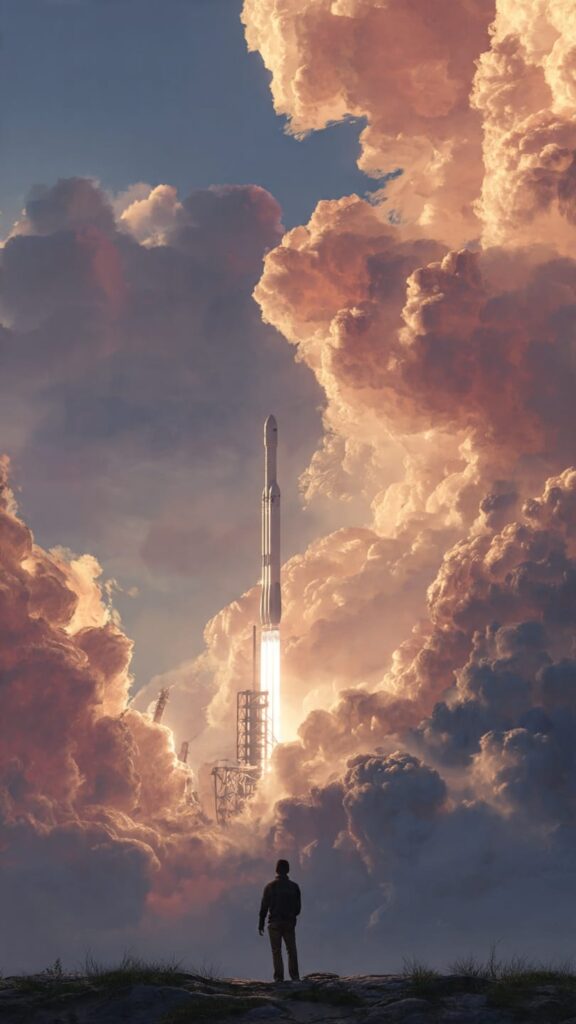
IMAGE AI GENERATED
SpaceX is now more than just a rocket builder. It is a comprehensive infrastructure ecosystem. It functions as a rocket manufacturer, a worldwide internet provider, a supercomputer operator, a pioneer in AI software, and a social media data pipeline when it enters the public trading floor under a single unified ticker.
Musk has made sure that the race to the future won’t be won on the ground by taking the business public at a $2 trillion value and basing its future on the limitless possibilities of orbital artificial intelligence. The stars will decide the outcome.
What do you think is the most exciting or concerning part of SpaceXAI’s plan to put data centers in space?