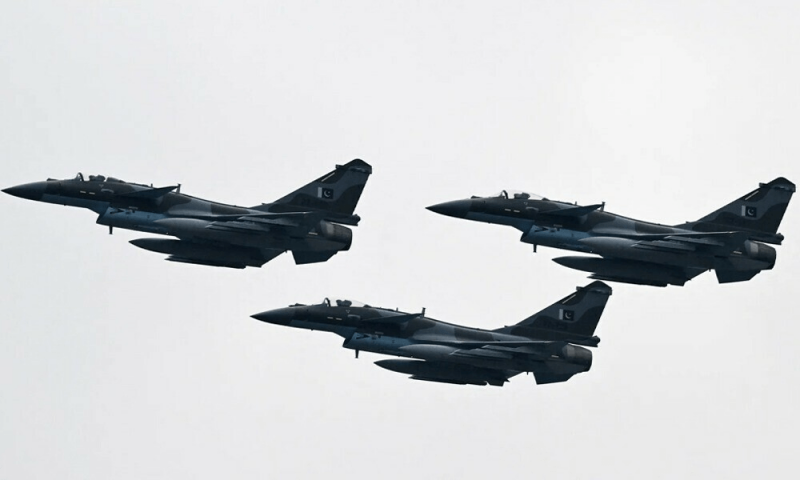
According to Bloomberg on Wednesday, Chinese companies that produce fighter jets enjoyed an increase in sales after becoming well-known during the India-Pakistan conflict last year.
China’s AVIC Chengdu Aircraft Co., a Chengdu-based firm, said that its sales increased to 75.4 billion yuan ($11 billion) in 2025, up 15.8% from the year before, and its earnings increased 6.5% to 3.4 billion yuan, both of which were the biggest in the company’s history.
With first-quarter sales rising by almost 80% year over year in 2026, the pace continued.
Chinese fighter jet sales rising rapidly
Analysts attribute the impressive performance to increased worldwide attention after the May 2025 India-Pakistan confrontation, in which Pakistan claimed that the jointly constructed JF-17 Thunder aircraft and the Chinese-built J-10 fighter jet were crucial to aerial combat.
While New Delhi claimed it also damaged Pakistani aircraft, which Islamabad disputes, Islamabad claimed several Indian aircraft, including French-made Rafael advanced jets, were brought down.
Several developing nations looking for affordable substitutes for Western systems took notice of the battle, which served as a unique real-world test of contemporary Chinese military gear.
Since then, countries including Bangladesh, Iraq, and Indonesia have expressed interest in purchasing Chinese-made fighter jets, especially the JF-17
A portion of AVIC Chengdu’s financial development was ascribed to a reorganization that increased operational efficiency by consolidating its key aircraft manufacturing assets. In order to satisfy growing demand, the business is also increasing production capacity in Chengdu, particularly for cutting-edge platforms like the fifth-generation J-20 fighter jet.
The J-35 stealth fighter manufacturer, AVIC Shenyang Aircraft Co., also announced higher profits and is getting ready to increase production at a new location.
Although both businesses are still subject to US sanctions, industry observers claim that geopolitical tensions and changing defence objectives are driving up demand for Chinese military exports, especially in Asia, Africa, and the Middle East.