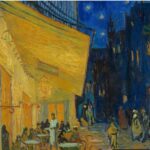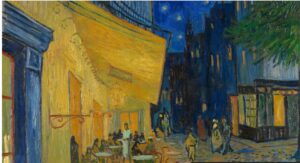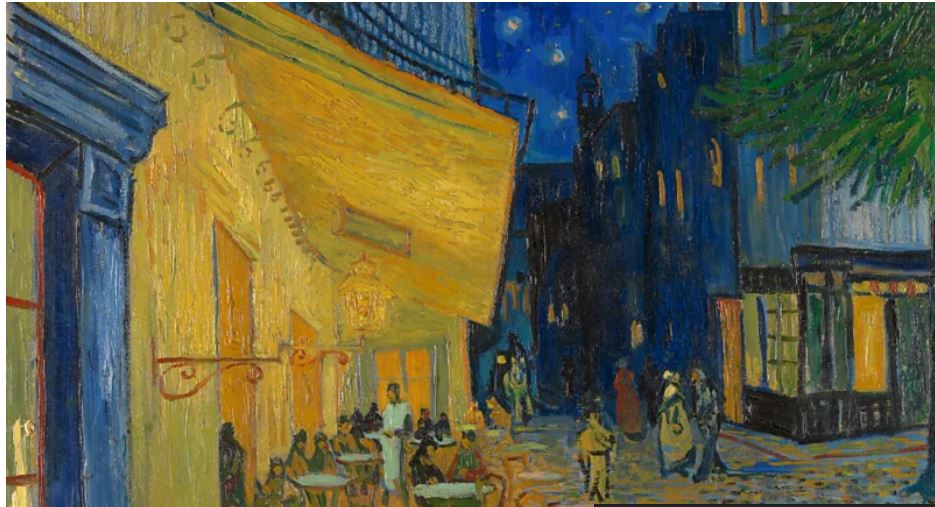
Vincent van Gogh’s Café Terrace at Night (Arles, 1888) marks his first “starry night” and a turning point in his art, transforming an ordinary square into a luminous, dreamlike scene. Painted nine months before The Starry Night, this lantern-lit café under a pulsing deep-blue sky shows Van Gogh shifting from strict representation to a vision that captures emotion and the “sense of the infinite.”
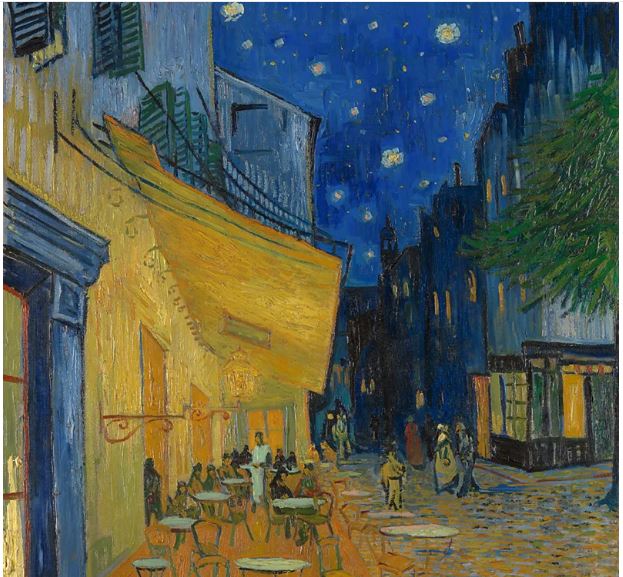
Fresh from Paris and seeking renewal in Provence, he set up his easel on a warm September evening in Arles’ Place du Forum and used bold color, rhythmic brushwork, and glowing contrasts to merge everyday life with a cosmic atmosphere. Below are five key details in Café Terrace at Night that explain how Van Gogh made the familiar feel transcendent: composition and perspective, color and contrast, expressive brushstrokes, symbolic lighting, and the dialogue between past and present. Keywords: Café Terrace at Night, Van Gogh Arles 1888, first starry night, Vincent van Gogh, art analysis. Would you like a 300–400 word expanded version that explains each of the five details?