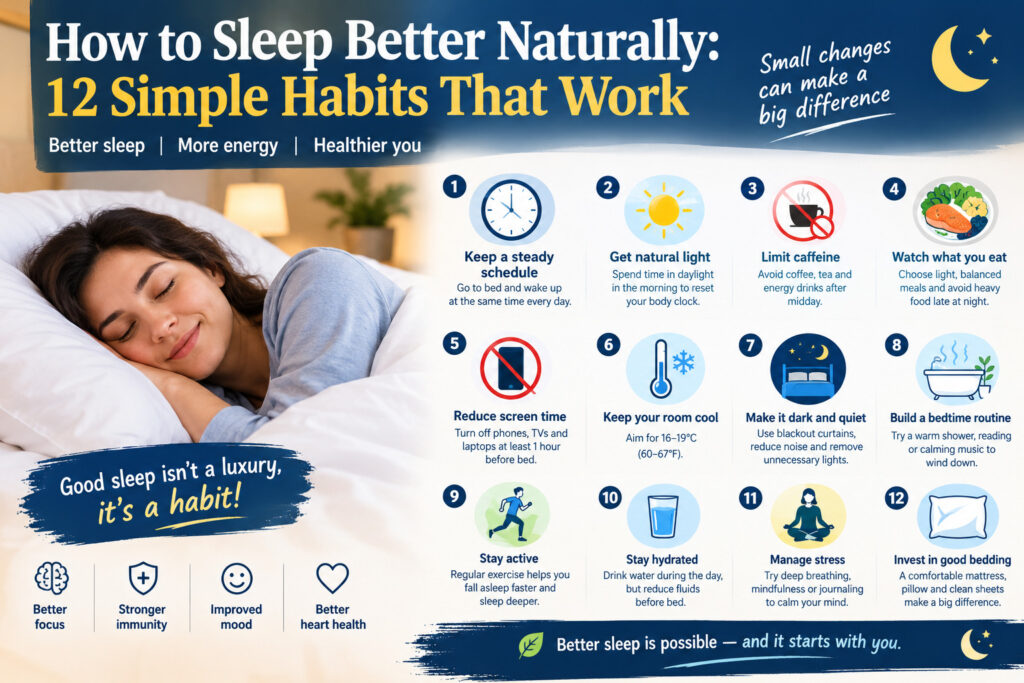
Millions of adults wake up tired and wonder how to sleep better naturally without relying on pills or gadgets. The good news is that small daily habits can make a real difference. Light, timing, food, your bedroom and your evening routine all shape how well you rest. This guide explains each one in plain language, with simple steps you can try tonight.
Quick answer: To sleep better naturally, keep a regular bedtime and wake time, get daylight each morning, limit caffeine after midday, keep your bedroom cool, dark and quiet, and switch off screens an hour before bed. Follow these habits for two to three weeks and many people notice they fall asleep faster and wake less often.
Why Sleep Matters More Than Most People Think
Sleep is not wasted time. While you rest, your brain sorts memories, your body repairs tissue and your hormones reset for the next day. Poor sleep, on the other hand, is linked with low mood, trouble concentrating, weaker immunity and a higher chance of accidents.
The problem is common. The Centers for Disease Control and Prevention (CDC) reports that about one in three adults in the United States regularly gets less than the recommended amount of sleep. Surveys in the UK, Australia and across Europe show similar patterns, with busy work lives, caring duties and late night screen use all playing a part.
You can read the CDC overview on sleep and health for more detail. The key message is simple. Good sleep is a habit, and habits can be improved one small step at a time.
How Many Hours of Sleep Do You Need?
Most healthy adults need around seven to nine hours of sleep each night. The CDC recommends at least seven hours for adults aged 18 to 60. The NHS in the UK gives a similar range and says the right amount varies from person to person.
A simple guide by age
- Teenagers: eight to ten hours
- Adults aged 18 to 60: seven hours or more
- Adults aged 61 to 64: seven to nine hours
- Adults aged 65 and over: seven to eight hours
How to tell if you are getting enough
A good test is how you feel, not only the number on the clock. If you wake up without an alarm feeling fairly refreshed, and you stay alert through the afternoon, you are probably getting enough. If you rely on several cups of coffee to function, or you fall asleep within minutes of sitting down in the evening, your body may be asking for more rest.
How to Sleep Better Naturally: Start With a Steady Schedule
Your body runs on an internal clock called the circadian rhythm. It controls when you feel sleepy and when you feel alert. This clock loves routine, so the single most powerful habit is going to bed and waking up at roughly the same time every day.
Keep weekends close to weekdays
Many people sleep late on Saturday and Sunday to catch up. This feels helpful, but it can shift your body clock and make Sunday night harder. Try to keep your wake time within an hour of your weekday time. If you need extra rest, go to bed a little earlier instead of sleeping in.
Pick a wake time first
It is easier to fix your wake time than your bedtime. Choose a time you can keep every day, then count back seven to nine hours. That gives you a target bedtime. Move your bedtime earlier by 15 minutes every few days until you reach it. Small changes are easier to keep than big ones.
Build a Simple Bedtime Routine
A routine tells your brain that the day is ending. Think of it as a gentle ramp down rather than a sudden stop. Even 20 to 30 minutes of calm activity can help.
What to do in the last hour
- Dim the lights in your home
- Put your phone on charge outside the bedroom or across the room
- Prepare tomorrow’s clothes and bag so your mind can let go
- Take a warm shower or bath, which can help your body cool down afterwards and feel sleepy
- Read a paper book or listen to quiet music
Try a warm, caffeine free drink
A cup of herbal tea can be a pleasant signal that the day is over. Chamomile is a popular choice. If you enjoy spiced drinks, you may like our guide on what happens to your body when you eat ginger every day for a month, which explains how this common kitchen ingredient can fit into a healthy routine. Keep drinks small so you are not woken by a trip to the bathroom.
Get Your Bedroom Ready for Sleep
Your bedroom should be a place your brain links with rest. Three things matter most: temperature, light and noise.
Keep it cool
Most sleep experts suggest a bedroom temperature of roughly 16 to 19 degrees Celsius (60 to 67 degrees Fahrenheit). Your body temperature naturally drops as you fall asleep, and a cool room supports that process. If it is hot, use a fan, lighter bedding or breathable cotton sheets.
Make it dark
Even small amounts of light can affect sleep quality. Blackout curtains or blinds help, especially in cities and during bright summer evenings. Cover or turn away glowing clocks and standby lights. If you cannot darken the room, a comfortable eye mask is a simple fix.
Keep it quiet
Sudden noises can pull you out of deep sleep without you fully waking. Soft rugs, curtains and closed doors reduce sound. If you live near traffic, a steady background sound such as a fan or white noise machine can cover sudden changes. Earplugs are another low cost option.
Check your bed and bedding
If your mattress is sagging or you often wake with a sore back or neck, it may be time to review your setup. Choose a pillow that keeps your neck in a neutral position. Wash your sheets weekly and keep the bed for sleep rather than work.
If you want your bedroom to feel calm as well as functional, browse our Home and Aesthetic section for decor and organisation ideas that make small spaces feel peaceful.
Use Daylight and Movement to Set Your Body Clock
Light is the strongest signal for your body clock. Bright light in the morning tells your brain that the day has started and helps you feel sleepy at the right time later.
Get outside early
Aim for 15 to 30 minutes of outdoor light within an hour or two of waking. Even on a cloudy day, outdoor light is far brighter than indoor lighting. Have your coffee on the doorstep, walk part of your commute or take a short stroll before work.
Move your body during the day
Regular physical activity is linked with better sleep quality. A brisk walk, a cycle ride, swimming or a home workout all count. Most people sleep best when they finish hard exercise at least two to three hours before bed. Gentle stretching or yoga in the evening is usually fine.
Limit long naps
A short nap of 10 to 20 minutes can boost alertness. Long or late naps can make it harder to fall asleep at night. If you nap, do it before mid afternoon and set an alarm.
Foods and Drinks That Help or Hurt Your Sleep
What you eat and drink has a real effect on your rest. You do not need a perfect diet, but a few simple rules go a long way.
Watch your caffeine
Caffeine stays in your body for many hours. For many adults it takes five to six hours for half of it to leave your system. A coffee at 4 pm can still be active at bedtime. A helpful rule is to stop caffeine around midday or at least eight hours before bed. Remember that tea, cola, energy drinks and chocolate also contain caffeine.
Be careful with alcohol
Alcohol may make you feel sleepy at first, but it often breaks up your sleep later in the night and reduces the quality of deep and dream sleep. If you drink, keep it moderate and finish at least three hours before bed.
Eat your evening meal early
A very large or spicy meal close to bedtime can cause discomfort and reflux. Try to finish dinner two to three hours before sleep. If you are hungry later, choose a light snack.
Light snacks that suit the evening
- A banana with a spoonful of nut butter
- A small bowl of oats with milk or a plant based alternative
- Plain yoghurt with berries
- A slice of wholegrain toast
These foods are not magic cures. They simply provide a gentle, balanced option that is less likely to upset your stomach than a heavy meal. For more everyday wellness reading, visit our Lifestyle category.
Stay hydrated, but not too late
Drink enough water during the day so you are not thirsty at night. Slow down your fluids in the last hour or two before bed to reduce night time toilet trips.
Manage Screens and Late Night Scrolling
Phones, tablets and televisions can delay sleep in two ways. The bright light can reduce your natural sleepiness, and the content itself keeps your mind busy. A tense email or an exciting video is not a good lead in to rest.
Try a screen curfew
Switch off screens 30 to 60 minutes before bed. If that feels impossible, start with 15 minutes and build up. Replace the screen with a book, a podcast with the screen off or a few minutes of stretching.
Use the settings you already have
Most phones include a night mode that warms the screen colour and a do not disturb setting that silences alerts. Turn them on in the evening. For more simple phone tips, explore our Technology section.
Keep your phone out of reach
If you use your phone as an alarm, buy a cheap alarm clock instead. Leaving your phone in another room removes the temptation to check messages at 2 am.
Calm a Busy Mind
Stress is one of the most common reasons people lie awake. The aim is not to force your mind to stop, but to give it a calmer place to land.
Write it down
Keep a notepad by your chair or bed. Spend five minutes listing tomorrow’s tasks and any worries. Once they are on paper, your brain does not need to hold them.
Try slow breathing
Breathe in through your nose for four counts, hold for a moment, then breathe out slowly for six counts. Repeat for a few minutes. Longer breaths out help the body settle.
Relax your muscles
Starting at your feet, tighten each muscle group for a few seconds, then release. Work up through your legs, stomach, shoulders and face. This simple method is called progressive muscle relaxation and many people find it helpful.
Do not watch the clock
If you cannot sleep after what feels like 20 minutes, get up and sit somewhere dim. Do something quiet, such as reading, until you feel sleepy, then return to bed. This helps your brain link the bed with sleep rather than frustration.
Common Sleep Mistakes to Avoid
Some habits quietly undo your hard work. Check whether any of these sound familiar.
- Changing your wake time dramatically at weekends
- Using your bed as an office or a cinema
- Having a large coffee late in the day
- Looking at work messages in bed
- Relying on alcohol to fall asleep
- Expecting perfect results in one night
Be patient. Habits take time to settle, and the first week may feel no different. Most people need two to three weeks of steady practice before they notice a clear change.
A Simple 7 Day Plan to Get Started
You do not need to change everything at once. Add one habit each day and keep the earlier ones going.
- Day 1: Choose a wake time you can keep every day
- Day 2: Get 15 minutes of outdoor light in the morning
- Day 3: Stop caffeine after midday
- Day 4: Cool, darken and quieten your bedroom
- Day 5: Start a 20 minute wind down routine
- Day 6: Switch off screens 30 minutes before bed
- Day 7: Review what worked and adjust
Keep a short sleep diary for the first two weeks. Note your bedtime, wake time and how rested you feel. Patterns often become clear on paper that you cannot see in your head.
When to Speak to a Qualified Professional
Self help habits are useful, but they are not right for every situation. Speak to a doctor or another qualified health professional if you:
- Struggle to sleep most nights for more than a few weeks
- Snore loudly, gasp or stop breathing during sleep
- Feel very sleepy during the day despite enough time in bed
- Have strong urges to move your legs at night
- Notice that low mood or anxiety is affecting your sleep
Conditions such as sleep apnoea, restless legs and insomnia are common and treatable. The NHS offers practical advice on how to fall asleep faster and sleep better, and it is a trusted place to start. This article is general information and does not replace personal medical advice.
Frequently Asked Questions
How can I sleep better naturally tonight?
Keep your room cool, dark and quiet, avoid caffeine and heavy meals this evening, and switch off screens at least 30 minutes before bed. A warm shower and a few minutes of slow breathing can also help you feel ready for sleep. One night will not fix a long term pattern, but it is a good start.
How long does it take to fix a sleep routine?
Most people need about two to three weeks of steady habits before they notice a clear improvement. Keeping the same wake time every day is the most useful step. If nothing changes after several weeks, speak to a doctor.
What foods help you sleep better?
Balanced evening snacks such as a banana, oats, yoghurt or wholegrain toast are gentle options. No food guarantees better sleep, but eating dinner early and avoiding heavy, spicy or sugary meals close to bedtime usually helps.
Is it bad to use my phone before bed?
It can delay sleep because the light and the content keep your brain alert. Try to stop using screens 30 to 60 minutes before bed. If you must use your phone, turn on night mode, lower the brightness and avoid stressful content.
Do naps help or hurt night time sleep?
Short naps of 10 to 20 minutes before mid afternoon can boost alertness without affecting night sleep for most people. Long or late naps can make it harder to fall asleep, so keep them brief and early.
Final Thoughts
Learning how to sleep better naturally is less about one big fix and more about many small choices. A steady schedule, morning light, a calm bedroom, smart food and drink choices and a gentle bedtime routine all work together. Start with one or two habits this week, be patient with yourself and build from there. Your energy, mood and focus are likely to thank you.
Sleep needs differ from person to person, so if you have ongoing concerns, please speak to a qualified health professional.